


Parents across Canada are increasingly looking beyond traditional tutoring. Today, the conversation is no longer just about better grades — it is about sharper thinking, stronger focus, higher confidence, and long-term cognitive growth.
That is why programs like UCMAS, Russian Math, and Spirit of Math are gaining attention among parents searching for meaningful enrichment opportunities.
At first glance, all three appear to be “math programs.” But in reality, they approach child development very differently.
Some emphasize academic acceleration. Others focus on cognitive development and whole-brain activation. Some push advanced problem-solving. Others build visualization, concentration, and mental agility through structured training.
So which one is actually better for brain development in kids?
Let’s break it down carefully.
The Real Question Parents Should Ask
Most parents compare programs by asking:
- Which one improves school math?
- Which one is harder?
- Which one produces faster learners?
But the smarter question is:
Which program develops the child’s brain most effectively during the early learning years?
Because during ages 4–13, children are not just learning numbers. Their brains are rapidly developing:
- Memory capacity
- Processing speed
- Visualization ability
- Focus and concentration
- Listening skills
- Confidence
- Logical reasoning
- Creativity
And this is where different programs begin to separate themselves.
What Is UCMAS?
The UCMAS abacus math program is built around abacus mental math training.
Children first learn calculations using a physical abacus. Over time, they begin visualizing the abacus mentally and solving calculations without physically touching it.
This process activates multiple areas of the brain simultaneously.
Unlike traditional math tutoring, UCMAS is designed primarily as a brain development system rather than an academic acceleration course.
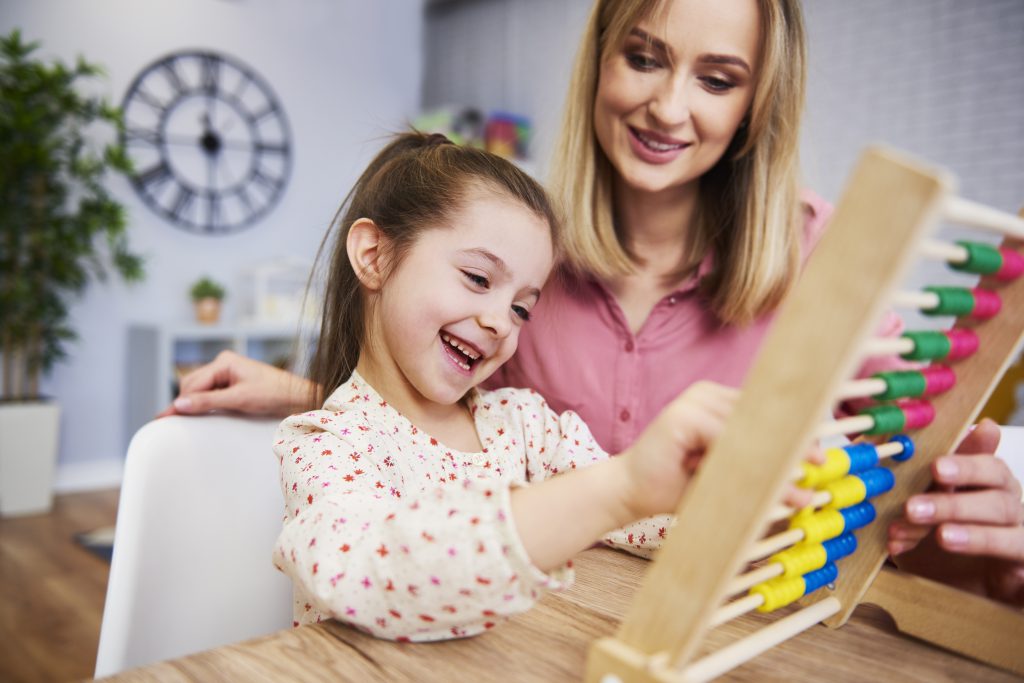
The focus is not only on calculations — it is on:
- Visualization
- Concentration
- Listening accuracy
- Speed processing
- Mental retention
- Cognitive flexibility
This is why many parents searching for an effective memory improvement program children can benefit from often explore abacus-based learning.
The program also works exceptionally well as an after school math program because it trains mental discipline without overwhelming children academically.
What Is Russian Math?
Russian Math programs are heavily focused on advanced conceptual mathematics and analytical problem-solving.
These programs are rigorous and academically demanding. Students are often introduced to advanced mathematical concepts much earlier than standard school curriculums.
Russian Math emphasizes:
- Logical depth
- Mathematical proofs
- Advanced reasoning
- Challenging problem-solving
- Competitive math preparation
For highly math-oriented students, this structure can be intellectually stimulating.
However, Russian Math primarily develops mathematical thinking rather than broader cognitive skills like visualization, auditory memory, or mental processing speed.
It functions more like an advanced math tutoring pathway than a whole-brain development program.
What Is Spirit of Math?
Spirit of Math positions itself as an enriched mathematics program focused on high-performance thinking.
The program blends:
- Advanced mathematics
- Critical thinking
- Verbal reasoning
- Problem-solving challenges
Spirit of Math often attracts academically strong students looking for intellectual enrichment beyond school curriculum standards.
Compared to Russian Math, it incorporates more collaborative learning and broader analytical exercises.
However, like Russian Math, its primary objective remains mathematical excellence rather than neurological skill-building.
It is highly effective for advanced academic learners but less focused on sensory-based cognitive development.
The Biggest Difference: Academic Enrichment vs Brain Development
This is the most important distinction parents often miss.
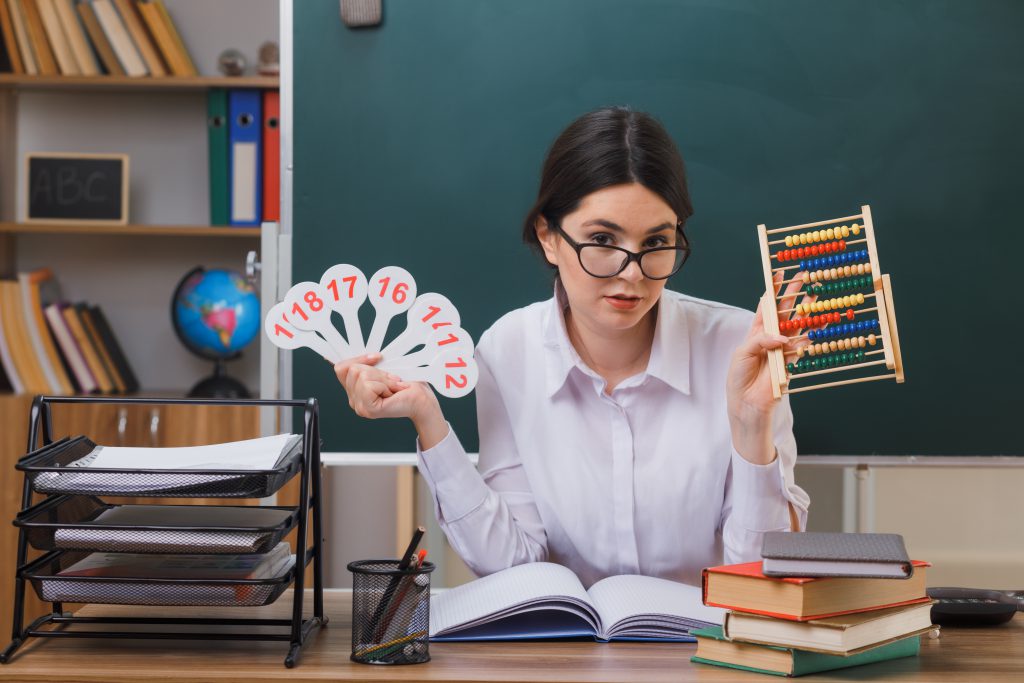
Russian Math and Spirit of Math primarily focus on:
- Advanced academics
- Competitive math
- Higher-level problem-solving
- Curriculum acceleration
UCMAS primarily focuses on:
- Brain activation
- Mental visualization
- Cognitive processing
- Focus enhancement
- Memory strengthening
- Listening accuracy
- Confidence building for kids
That does not mean one is universally “better.”
It means they are designed for different outcomes.
Parents looking mainly for Olympiad-style mathematical advancement may prefer Russian Math or Spirit of Math.
Parents looking for stronger concentration, faster thinking, mental agility, and whole-brain development often lean toward abacus learning.You can also explore how UCMAS compares to other programs to understand how cognitive-focused learning differs from conventional enrichment systems.
How Abacus Mental Math Impacts Brain Development
One reason abacus mental math has gained global attention is because of how uniquely it trains the brain.
When children visualize an abacus mentally, they engage:
- Visual memory
- Spatial reasoning
- Fine motor coordination
- Auditory processing
- Sequential thinking
- Rapid decision-making
Over time, this repeated activation strengthens neural pathways associated with concentration and memory retention.
The science behind abacus shows that mental visualization exercises can significantly enhance cognitive flexibility in children during formative learning years.
Unlike passive memorization, abacus-based training forces active mental participation.
That is why many parents report improvements beyond math, including:
- Better classroom attention
- Faster response time
- Improved listening
- Higher self-confidence
- Reduced distraction
Which Program Improves Focus and Memory Better?
This is where UCMAS often stands apart.
Russian Math and Spirit of Math are excellent at developing analytical reasoning and mathematical discipline.
But UCMAS specifically trains:
- Concentration
- Attention span
- Visual memory
- Processing speed
- Mental endurance
The repetitive mental visualization involved in an abacus math course requires sustained focus in ways that traditional worksheets do not.
Many parents searching for focus classes for children eventually discover that cognitive repetition through abacus exercises can improve attention naturally over time.
The abacus for focus and memory approach is particularly appealing for parents concerned about distraction, screen dependency, or low concentration spans.
Which Program Helps Build Confidence?
Confidence in children often comes from competence.
Russian Math and Spirit of Math build confidence through academic achievement and intellectual challenge.
UCMAS builds confidence differently.
Children begin solving complex calculations mentally at remarkable speeds. This creates a visible sense of mastery early in the learning process.
For many children, especially shy or average-performing students, this becomes transformational.
They begin participating more actively:
- In classrooms
- During presentations
- In competitions
- During problem-solving situations
This is one reason many parents view abacus classes as more than simply math after school programs.
They become platforms for confidence building for kids through consistent mental achievement.
Which Program Is Better for Younger Children?
For younger learners between ages 4–10, UCMAS often has a developmental advantage because the brain is still highly adaptable during these years.
The earlier children begin visualization-based training, the stronger the long-term cognitive impact can become.
Russian Math and Spirit of Math are often better suited for children already comfortable with academic rigor and abstract reasoning.
Younger children who struggle with attention or confidence may find abacus learning more engaging and accessible initially.
This is why many parents interested in the benefits of abacus learning start their children earlier rather than later.
So, Which One Is Better?
The answer depends entirely on the goal.
| Program | Primary Focus | Best For |
|---|---|---|
| UCMAS | Brain development, visualization, focus, memory | Cognitive growth and whole-brain activation |
| Russian Math | Advanced conceptual mathematics | Highly academic math learners |
| Spirit of Math | Enriched analytical thinking | Competitive and advanced students |
If your goal is:
- Competitive mathematics → Russian Math or Spirit of Math may fit well.
- Stronger focus, memory, mental processing, and cognitive flexibility → UCMAS may offer broader developmental benefits.
And for many parents, that distinction matters more than simply “harder math.”
The Best Program Is the One That Develops the Child — Not Just the Student
Parents today are realizing that academic pressure alone is not enough.
Children need:
- Better focus
- Stronger thinking habits
- Mental resilience
- Faster processing
- Confidence
- Cognitive flexibility
That is why brain-training-oriented learning systems are growing rapidly across Canada.
Programs built around abacus mental math are not merely replacing traditional tutoring. They are redefining what early cognitive development can look like. You can also explore the debate around tutoring vs brain training to better understand what type of learning environment best supports your child’s long-term growth.
If you want to explore how UCMAS helps children strengthen focus, memory, confidence, and problem-solving skills through structured cognitive training, book a free info session to learn more about the program.