




Modern children are growing up in a world filled with constant distractions. Notifications, short-form videos, gaming, and endless digital entertainment compete for their attention every minute. As a result, many parents notice that their children struggle to concentrate, forget instructions quickly, or lose interest in learning.
While worksheets and extra tutoring often address academic performance, they don’t always strengthen the brain skills behind learning. That’s where abacus training stands apart.
Unlike traditional learning methods, abacus develops the brain itself. Through structured visualization, mental calculations, and consistent practice, children gradually improve their concentration, memory, and overall thinking abilities.
At UCMAS Canada mental math and brain development programs, children don’t simply learn mathematics—they train their minds to think faster, focus longer, and remember more effectively.

Why Focus and Memory Matter More Than Ever
Success in school depends on far more than intelligence. Children also need the ability to stay attentive, retain information, process instructions, and solve problems confidently.
Many children today experience:
- Difficulty paying attention during class
- Poor information retention
- Easily distracted minds
- Reduced confidence while solving problems
- Overdependence on calculators and digital devices
These challenges are often linked to declining attention span, not a lack of ability.
If you’ve ever wondered why some children remain engaged while others constantly lose focus, our article on why children can’t focus in school explains the underlying reasons in greater detail.
How Abacus Trains the Brain Instead of Just Teaching Math
Many parents believe abacus is simply another way of learning arithmetic.
In reality, it is a complete brain development system.
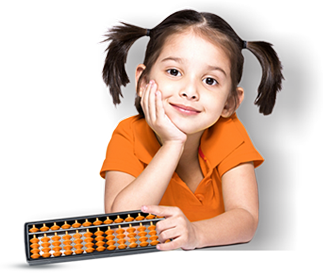
Initially, children perform calculations using a physical abacus math tool. As they progress, they begin visualizing the beads mentally and manipulating them entirely inside their minds.
This mental visualization simultaneously activates multiple regions of the brain responsible for:
- Memory
- Concentration
- Logical thinking
- Visual processing
- Decision making
This whole-brain engagement is what makes UCMAS much more than a mathematics program.
Learn more about this fascinating process in our article on how abacus training shapes children’s brain.
How Abacus Improves Memory
Children constantly receive new information every day.
Remembering it is the real challenge.
One of the biggest reasons abacus is considered an effective memory improvement program children benefit from is its reliance on visualization.
Instead of memorizing formulas, children learn to create vivid mental images of the abacus and manipulate them rapidly.
Repeated visualization strengthens:
- Short-term memory
- Working memory
- Recall speed
- Information retention
As mental images become stronger, children naturally begin remembering classroom lessons, instructions, spellings, and sequences more effectively.
If you’d like to understand the neuroscience behind this process, explore the science behind abacus intelligence.
How Abacus Builds Better Concentration
Concentration is a skill—not a personality trait.
Every abacus session requires children to:
- Listen carefully
- Visualize bead positions
- Calculate accurately
- Avoid distractions
- Maintain mental focus
Unlike passive learning, every second demands active brain engagement.
Over time, this repeated practice acts like exercise for the brain, making it one of the most effective focus classes for children available today.
Parents often notice improvements beyond the classroom, including:
- Longer homework sessions without frustration
- Better listening habits
- Increased patience
- Improved classroom participation
These improvements are a direct result of consistent concentration improvement kids experience through structured mental training.

Better Focus Leads to Better Problem Solving
Strong concentration isn’t valuable only for academics.
It influences how children approach everyday challenges.
Children who can stay focused are better equipped to:
- Analyze situations
- Think logically
- Break large tasks into smaller steps
- Make better decisions
These enhanced problem solving skills for kids extend into science, reading comprehension, sports, coding, music, and even social interactions.
Rather than memorizing answers, children learn how to think independently.
Visualization: The Secret Behind Faster Learning
Visualization is one of the most powerful learning techniques known to cognitive science.
When children mentally picture an abacus instead of relying on physical objects, they strengthen their visualization skills while simultaneously improving memory and concentration.
This ability eventually helps them:
- Understand diagrams faster
- Solve mathematical problems mentally
- Remember classroom concepts
- Read with better comprehension
- Learn more efficiently across subjects
This is one reason why UCMAS graduates often demonstrate stronger overall cognitive skills, not just mathematical ability.
Our article on abacus training and brain development explores these benefits further.
Can Abacus Help Reduce Screen Dependency?
Many parents worry that excessive screen exposure affects their child’s ability to focus.
Research increasingly suggests that prolonged digital stimulation can reduce sustained attention and impact cognitive development.
Abacus provides an engaging offline activity that requires complete mental participation without digital distractions.
Instead of consuming information, children actively create mental images, solve problems, and remain engaged throughout the lesson.
Our article on whether screen time lowers cognitive performance explains why reducing passive screen use benefits children’s learning.
Why Parents Choose UCMAS
Parents aren’t simply looking for better grades.
They’re looking for lifelong learning skills.
Through structured brain development exercises, UCMAS helps children develop:
- Better concentration
- Stronger memory
- Increased confidence
- Higher mental calculation speed
- Improved classroom participation
- Greater independence in learning
Our abacus training develops the mental foundations that influence every aspect of learning, including memory, concentration, reasoning, visualization, and confidence. Rather than teaching children to memorize more, UCMAS teaches them how to think.
If you’re ready to help your child unlock their full potential, book an assessment session with UCMAS today and experience the difference brain training can make.