


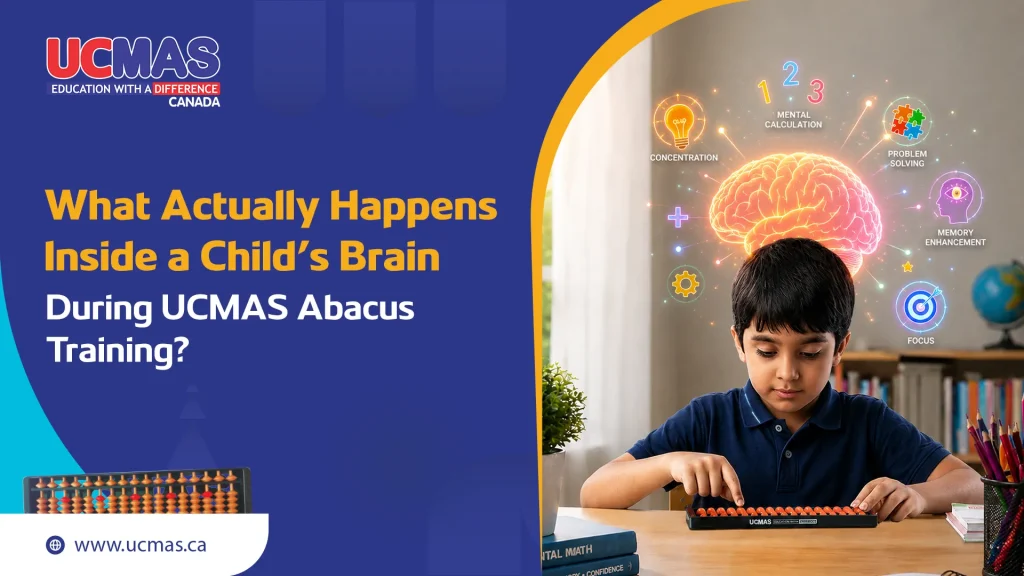
Parents often assume that abacus classes are mainly about helping children solve math problems faster. But modern neuroscience suggests something much deeper is happening.
During structured mental math practice, a child’s brain is constantly building new neural pathways. Areas responsible for memory, attention, visualization, processing speed, listening, and problem-solving begin working together more efficiently. This is one reason programs like UCMAS have become increasingly popular among parents looking for holistic cognitive development rather than just better grades.
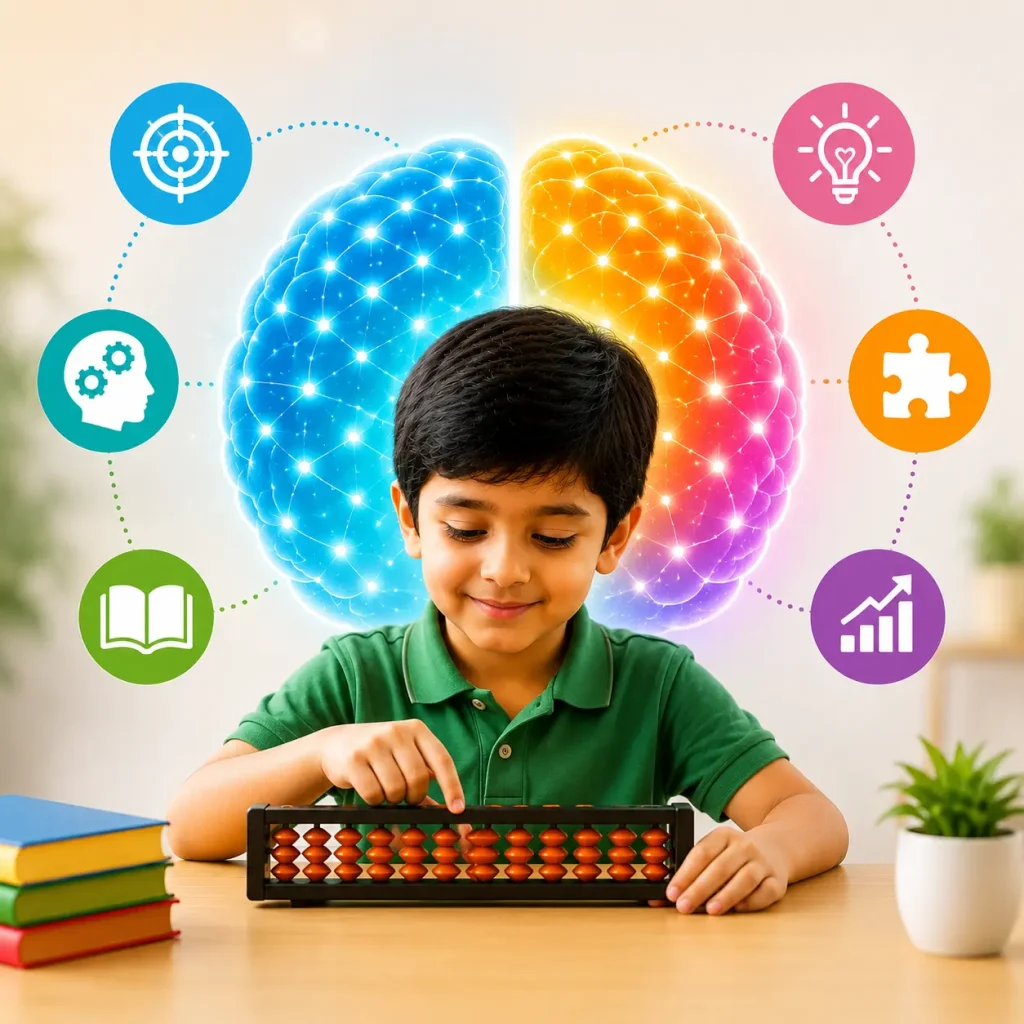
In simple terms, abacus training teaches the brain how to think differently.
And that changes far more than math performance.
The Brain Is Still Under Construction During Childhood
A child’s brain develops rapidly between ages 4 and 13. During these years, the brain forms millions of neural connections based on repeated experiences and activities.
Neuroscientists call this neuroplasticity — the brain’s ability to reorganize and strengthen itself through learning and repetition.
When children repeatedly engage in focused activities that require memory, visualization, coordination, and concentration, the brain adapts to become more efficient at those functions.
That is where structured mental math training becomes powerful.
Unlike passive learning methods where children simply memorize formulas, abacus-based learning forces the brain to actively process information from multiple directions at once.
Why Abacus Training Is Different From Traditional Math Learning
Traditional classroom math often relies heavily on written calculation and memorization. Children may solve equations mechanically without deeply engaging multiple cognitive systems.
Abacus learning works differently.
Initially, children use a physical abacus to understand number placement and movement. Over time, they begin visualizing the abacus mentally and solving calculations without physically touching it.
This process activates several brain functions simultaneously:
- Visual processing
- Auditory processing
- Fine motor coordination
- Working memory
- Mental visualization
- Attention control
- Logical sequencing
This combination is what makes abacus brain development such an interesting topic in neuroscience research.
Instead of treating math as a purely numerical task, the brain begins treating it as a visual-spatial exercise.
The Role of Visualization in Brain Development
One of the most fascinating aspects of abacus training is visualization.
As children advance, they stop depending on the physical abacus and begin imagining beads moving inside their minds. They “see” calculations happening mentally.
This activates regions of the brain associated with visual imagery and spatial reasoning.
Research in cognitive science has shown that visualization strengthens mental flexibility and improves a child’s ability to manipulate information internally. This is similar to how athletes mentally rehearse movements before competitions.
Children practicing mental abacus are essentially rehearsing numbers visually inside the brain.
That repeated visualization improves:
- Mental clarity
- Information retention
- Focus duration
- Sequential thinking
- Pattern recognition
This is also why many parents notice improvements in subjects beyond math after consistent training.
Both Sides of the Brain Begin Working Together
One simplified way to understand abacus learning is through left-brain and right-brain coordination.
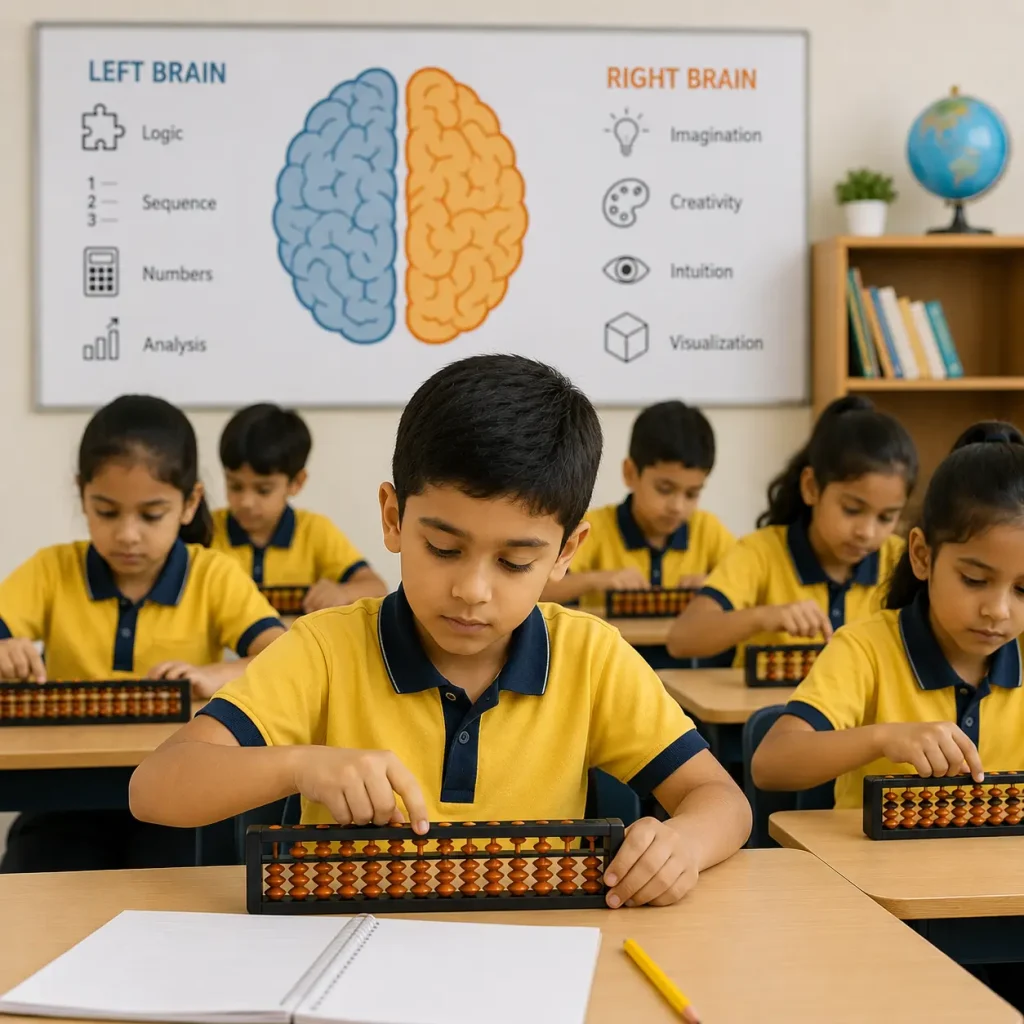
The left hemisphere is often associated with:
- Logic
- Analysis
- Sequencing
- Numbers
The right hemisphere is commonly linked to:
- Creativity
- Imagination
- Visualization
- Spatial awareness
Traditional math learning mainly emphasizes left-brain processing. Abacus learning, however, combines logical calculation with visualization and imagery.
This encourages stronger communication between both hemispheres of the brain.
While the “left-brain vs right-brain” concept is often oversimplified online, neuroscientists do agree that learning activities engaging multiple cognitive systems tend to strengthen overall brain integration.
That integration matters because real-world thinking rarely relies on a single isolated skill.
Working Memory Gets Stronger Through Repetition
Working memory is the brain’s temporary mental workspace.
It helps children:
- Hold information briefly
- Process instructions
- Solve problems step by step
- Maintain attention during tasks
Weak working memory often affects academic performance because children lose track of information midway through learning activities.
Mental abacus exercises constantly challenge working memory.
A child must:
- Remember numbers
- Visualize bead positions
- Process operations mentally
- Maintain concentration simultaneously
Over time, this repeated practice strengthens the brain’s ability to retain and manipulate information quickly.
This is one reason many educators connect abacus brain development with stronger classroom focus and listening skills.
Attention Span and Concentration Improve Naturally
Modern children are growing up in highly distracted environments.
Short-form videos, constant notifications, and rapid digital stimulation make sustained attention increasingly difficult.
Abacus training works against that trend.
Mental calculation requires children to maintain uninterrupted focus for extended periods. Losing concentration even briefly can disrupt the entire calculation sequence.
Over time, the brain adapts by improving selective attention and concentration control.
This is why many parents report that children involved in structured mental math programs often become:
- More attentive during studies
- Better listeners
- More patient during problem-solving
- Less mentally restless
These cognitive improvements are valuable far beyond academics.
The Brain Learns Speed Without Panic
There is an important difference between rushed thinking and efficient thinking.
Abacus training gradually improves processing speed through structured repetition, not pressure.
The brain begins recognizing numerical patterns faster. Neural pathways become more efficient through practice.
This is similar to how musicians eventually play instruments automatically after enough repetition. The brain reduces cognitive friction through familiarity and training.
Children who regularly practice mental math often develop:
- Faster recall
- Better information processing
- Improved decision-making speed
- Greater mental confidence
Importantly, this speed develops alongside accuracy and concentration.
Emotional Confidence Also Changes Brain Performance
One aspect parents sometimes overlook is emotional confidence.
When children repeatedly succeed at challenging mental tasks, the brain begins associating learning with achievement instead of stress.
This affects motivation significantly.
A child who believes “I can solve difficult things” approaches learning differently from a child who constantly fears failure.
That confidence can influence:
- Classroom participation
- Willingness to attempt challenges
- Public speaking confidence
- Academic resilience
- Self-esteem
Many UCMAS students experience this shift gradually. The improvement is often visible not just in calculations, but in posture, communication, and willingness to participate actively.
Why Early Training Matters Most
The younger brain is highly adaptable.
During childhood, neural connections strengthen rapidly through repetition. Skills learned consistently during these years often become deeply embedded.
This is why early cognitive training tends to have stronger long-term impact compared to learning the same skills later in life.
Structured programs that combine visualization, listening, memory, and coordination can help maximize this developmental window.
Parents exploring programs often begin by understanding concepts like mental math for elementary students before enrolling children into advanced training.
The earlier children develop strong learning habits and mental discipline, the easier future academic challenges often become.
What Neuroscience Ultimately Suggests
Neuroscience does not claim abacus training magically increases intelligence overnight.
But research strongly supports the idea that repeated cognitive exercises can strengthen neural efficiency and improve several executive functions in children.
Mental math training combines:
- Visualization
- Memory
- Focus
- Coordination
- Sequential thinking
- Speed processing
Few childhood learning systems activate so many cognitive functions simultaneously in such a structured manner.
That is what makes abacus training unique.
It is not merely about calculating numbers quickly.
It is about training the brain to process information more effectively.
A Smarter Way to Build Cognitive Skills
Parents today are increasingly looking beyond rote academics. They want learning systems that help children become sharper thinkers, better problem-solvers, and more confident learners.
Programs like UCMAS focus on exactly that combination of cognitive development and practical learning.
The real value of mental math may not be the speed of calculation itself.
It may be the way the brain changes while learning it.
If you want your child to improve concentration, memory, visualization, and confidence through structured mental math training, now is the perfect time to explore how the program works.
Book an Abacus Session with UCMAS Canada to learn more!