


Parents often see an abacus and assume it is simply a counting tool. But modern neuroscience tells a much bigger story. Behind those colorful beads lies a powerful cognitive training system that can influence how children process information, focus attention, solve problems, and build confidence.
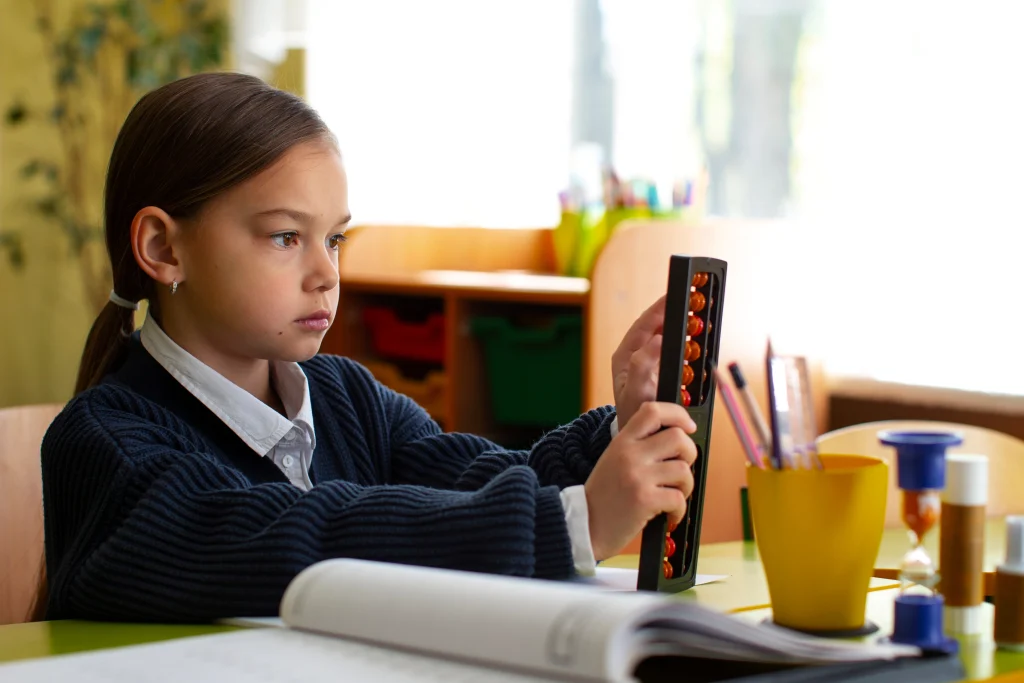
Today, many parents are actively searching for effective brain development classes for kids because they recognize that academic success is no longer only about memorization. Children need concentration, adaptability, creativity, and mental flexibility to thrive in school and beyond.
Programs like UCMAS Canada are gaining attention because they combine structured learning with whole-brain stimulation. And the science behind this approach is becoming increasingly difficult to ignore.
Why Childhood Is the Most Important Stage for Brain Development
A child’s brain develops faster during the early years than at almost any other stage of life. Between ages 4 and 14, neural connections are constantly forming, strengthening, and reorganizing based on experiences and repeated activities.
This process is known as Neuroplasticity — or, in simpler terms, the brain’s ability to reshape itself through learning.
When children repeatedly engage in activities that require visualization, concentration, listening, and problem-solving, the brain adapts by strengthening those neural pathways. This is why carefully designed enrichment classes for kids can have such a lasting impact.
Abacus training is particularly interesting because it does not activate just one cognitive skill at a time. Instead, it challenges multiple areas of the brain simultaneously.
How Abacus Training Goes Beyond Traditional Math Learning
Traditional math instruction often focuses heavily on formulas, repetition, and written calculations. Abacus learning, however, trains children to visualize numbers mentally.
At first, children use physical beads. Over time, they begin imagining the abacus in their minds and solving problems without touching the tool itself. This mental visualization process creates a much deeper form of engagement.

The result is not merely faster calculation speed. The real value lies in the broader abacus training cognitive benefits that emerge during the learning process.
Children gradually develop:
- Better focus
- Faster information processing
- Improved listening ability
- Stronger visualization skills
- Increased confidence under pressure
These are abilities that support success far beyond mathematics.
The Science of Bilateral Brain Activation
One of the most fascinating areas of abacus research involves bilateral brain activation.
The left hemisphere of the brain is commonly associated with logic, sequencing, and analytical thinking. The right hemisphere is more connected to imagination, creativity, visualization, and spatial awareness.
Many traditional classroom activities primarily stimulate one side at a time. Abacus training is different because it encourages both hemispheres to work together simultaneously.
While solving mental calculations, children must:
- Visualize the abacus
- Recall number positions
- Process auditory instructions
- Maintain concentration
- Perform calculations rapidly
This coordination strengthens communication between both sides of the brain, improving overall cognitive efficiency.
This is one reason why many researchers connect cognitive development abacus training with improved mental performance in children.
Working Memory: The Skill Most Parents Overlook
One of the strongest predictors of academic performance is not IQ alone — it is working memory.
Working memory kids rely on every day allows them to temporarily store and manipulate information. It helps children:
- Follow multi-step instructions
- Solve math problems
- Understand reading passages
- Stay organized during tasks
- Retain classroom information
Weak working memory often appears as distraction, forgetfulness, or slow learning.
Abacus exercises constantly challenge working memory because children must hold numerical information mentally while performing calculations at speed. Over time, this repeated mental practice strengthens memory retention and mental organization.
This is where many parents begin noticing practical changes:
- Children complete homework more independently
- They lose focus less frequently
- Mental calculations become easier
- Classroom confidence improves
The improvement extends well beyond arithmetic itself.
Mental Arithmetic and the Confidence Connection
Many children struggle with mathematics not because they lack intelligence, but because they develop fear around making mistakes.
This fear can gradually turn into long-term academic avoidance.
Parents searching for a genuine math anxiety solution often discover that confidence matters just as much as tutoring.
Abacus-based mental math classes create an interesting shift in how children approach numbers. Instead of relying solely on memorization, children begin understanding patterns visually and mentally.
As their calculation speed improves, hesitation decreases.
And when children repeatedly experience small wins during learning, confidence naturally grows.
This emotional transformation is one of the most underrated mental arithmetic benefits associated with abacus learning.
Can Abacus Training Really Influence IQ?
The relationship between abacus and IQ has become a topic of increasing interest among educators and researchers.
While no program can magically “create intelligence,” cognitive training can strengthen skills commonly associated with IQ measurements, such as:
- Processing speed
- Pattern recognition
- Problem-solving
- Attention control
- Spatial reasoning
- Memory retention
Abacus training works because it repeatedly exercises these mental systems in an engaging way.
The key is consistency.
Just like physical exercise strengthens muscles through repetition, structured mental training strengthens neural efficiency through repeated cognitive challenges.
This is why many parents see abacus learning not simply as an academic activity, but as a long-term investment in brain development.
Screen Time, Attention, and Cognitive Overload
Modern childhood comes with a challenge previous generations never faced: constant digital stimulation.
Fast-moving content, short-form videos, and continuous notifications can reduce deep focus and sustained attention over time. Parents concerned about concentration issues often explore activities that encourage active mental engagement instead of passive consumption.
Research-backed discussions around this topic can be found in this article on how screen exposure may affect cognitive performance in children from UCMAS.
Unlike passive entertainment, abacus training demands active visualization, listening, and concentration. It trains children to sustain mental effort for longer periods — a skill becoming increasingly valuable in today’s distracted world.
Why Abacus Programs Align Perfectly With Future-Ready Learning
Parents today are also thinking beyond report cards. They want activities that prepare children for future careers and real-world adaptability.
That is why many families exploring STEM programs for kids are increasingly including abacus training alongside coding, robotics, and science enrichment.
While coding develops computational thinking and robotics builds engineering exposure, abacus training strengthens the foundational cognitive abilities that support all advanced learning:
- Focus
- Logical thinking
- Memory
- Pattern recognition
- Mental flexibility
In many ways, abacus programs act as foundational brain training for future learning environments.
And unlike many digital learning tools, abacus learning develops these abilities without increasing screen dependency.
The Real Purpose of the Beads
The beads are never the final goal.
They are simply the starting point.
Over time, children stop depending on the physical abacus and begin visualizing calculations mentally. The true transformation happens internally — inside the brain itself.
That is why the most important abacus learning benefits are often invisible at first:
- Better concentration
- Improved listening
- Faster recall
- Reduced academic hesitation
- Greater confidence
- Stronger independent thinking
For parents looking into meaningful brain development classes for kids, the value of abacus training lies not in creating “human calculators,” but in building stronger learners.
Programs like UCMAS demonstrate that when learning combines neuroscience, visualization, and structured cognitive practice, the impact can extend far beyond mathematics — shaping how children think, learn, and approach challenges for years to come.
Book a free abacus session with us to learn more!