




Between the ages of 5 and 13, children go through an important period of growth. They are not only getting taller, becoming more independent, and learning new subjects—their brains are also developing skills that can influence how they learn, think, remember, and solve problems.
During these years, children strengthen abilities such as attention, memory, reasoning, self-control, and problem-solving. The experiences and learning opportunities they receive can help them practise these abilities and develop effective learning habits.
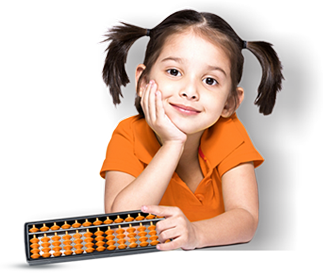
This is why structured enrichment programs such as UCMAS can complement school learning. Through abacus practice, visualization, and mental calculation, children get regular opportunities to exercise their minds while developing confidence with numbers.
Understanding brain development ages 5 to 13 can help parents make more informed choices about the activities and learning experiences they introduce during these formative years.
What Happens to the Brain Between Ages 5 and 13?
A child’s brain continues to mature throughout childhood and adolescence. Between 5 and 13, children become increasingly capable of managing more complex academic, social, and everyday challenges.
Their ability to pay attention for longer periods can improve. Working memory becomes increasingly useful for following instructions and completing multi-step tasks. Children also become better at planning, reasoning, recognizing patterns, and applying previously learned information to new situations.
At the same time, the brain is continually refining its networks based partly on experience and practice. Frequently used skills can become more efficient over time.
For parents interested in how structured mental activities fit into this process, Abacus Training & Brain Development offers additional insight into the relationship between abacus practice and children’s learning.

Why Are These Years So Important for Learning?
Children between 5 and 13 encounter rapidly increasing demands at school. Early elementary education may focus on foundational reading, writing, and numeracy. As children progress through the grades, they are expected to understand more complex ideas, work independently, remember instructions, and solve problems.
This makes cognitive development particularly relevant during these years.
Rather than focusing only on grades, parents can encourage children to strengthen the underlying learning skills that help them approach different subjects effectively. These include concentration, memory, logical thinking, visualization, problem-solving, and confidence.
Strong foundational abilities can make it easier for children to engage with increasingly challenging schoolwork.
Numeracy is one important part of this foundation. As explained in Why Early Numeracy Skills Build Academic Confidence, becoming comfortable with numbers can also help children approach mathematical learning with greater confidence.
Memory Is More Than Memorization
Memory plays an important role in almost everything a child does at school.
Children use working memory when they listen to instructions, perform calculations, read sentences, solve problems, or remember what they were doing before moving to the next step.
For example, solving a multi-step math problem may require a child to remember numbers, apply a rule, perform a calculation, and keep track of intermediate answers.
This is why parents looking for a memory improvement program children can participate in should consider activities that require active thinking rather than simple repetition.
Abacus learning is one such activity. Children initially manipulate a physical abacus and, with practice, may learn to visualize it mentally while performing calculations. Read The Science Behind Abacus Intelligence to explore how abacus learning engages different mental processes.
Focus and Concentration Need Practice Too
Today’s children face plenty of potential distractions. But concentration is not simply about telling a child to “pay attention.”
Like many learning abilities, sustained attention can be practised through activities that require children to remain engaged, follow sequences, and complete tasks accurately.
Structured learning environments can provide this practice. Some parents may look for focus classes for children or activities designed around concentration improvement kids can build through regular participation.
Abacus exercises require children to observe numbers, make calculations, manipulate or visualize beads, and arrive at an answer. The process encourages sustained engagement with the task at hand.
Parents can learn more about this connection in How Abacus Helps Improve Focus & Memory.
Mental Math Can Challenge a Growing Mind
Mental math for kids involves much more than answering arithmetic questions quickly. It can require attention, recall, visualization, number sense, and logical thinking to work together.
Imagine calculating without immediately reaching for a calculator or writing every step on paper. A child needs to hold information in mind, process it, and determine the answer.
Regular practice can therefore provide an engaging mental challenge.
UCMAS uses abacus-based learning and mental calculation activities to give children repeated opportunities to practise these abilities in a structured setting. The objective is not simply faster arithmetic; it is to help children become more comfortable using their minds actively and confidently.
How Parents Can Support Brain Development at Home
Supporting brain development in children does not mean filling every free hour with classes or worksheets. Children also need sleep, movement, play, conversation, creativity, and downtime.
Parents can create a supportive environment by encouraging reading, puzzles, age-appropriate games, physical activity, creative hobbies, and conversations that invite children to explain their thinking.
Instead of immediately giving an answer when a child is stuck, try asking questions such as, “What could you try next?” or “Is there another way to solve it?”
Such conversations encourage children to think through challenges rather than depend immediately on an adult for the solution.
Consistency also matters. A short period of regular, focused practice is often more manageable for children than occasional long sessions.

Building Skills That Extend Beyond Mathematics
One of the biggest advantages of enrichment activities is that the abilities children practise can be useful beyond the activity itself.
Abacus learning, for instance, combines calculation with visualization, listening, accuracy, and concentration. Children must follow instructions, remember processes, correct mistakes, and continue practising as tasks become more challenging.
These experiences can encourage useful habits such as persistence and independent thinking.
The aim is not to rush children academically. Instead, it is to provide age-appropriate opportunities that keep their minds active and encourage positive attitudes toward learning.
Making the Most of Ages 5–13
There is no single activity that determines how a child’s brain will develop. Genetics, environment, health, relationships, education, sleep, nutrition, physical activity, and everyday experiences all contribute.
However, the years from 5 to 13 provide many opportunities to establish productive learning habits.
Activities involving numbers, reading, movement, creativity, problem-solving, and social interaction can all contribute to a stimulating childhood. Structured programs can complement these experiences by giving children consistent opportunities to practise particular abilities.
For families considering a memory improvement program children can enjoy while strengthening their numerical abilities, abacus-based learning can be one option worth exploring.
Give Your Child’s Growing Mind New Challenges
The period between ages 5 and 13 is an important part of a child’s continuing development. Memory, concentration, reasoning, confidence, and problem-solving can all become increasingly sophisticated as children learn and gain experience.
At UCMAS, children experience structured abacus and mental arithmetic activities designed to make learning active, engaging, and challenging. Rather than focusing only on calculations, the program gives children opportunities to practise concentration, visualization, memory, and problem-solving.
Want to see how your child responds to abacus learning? Book an abacus session with UCMAS and discover the program firsthand.