



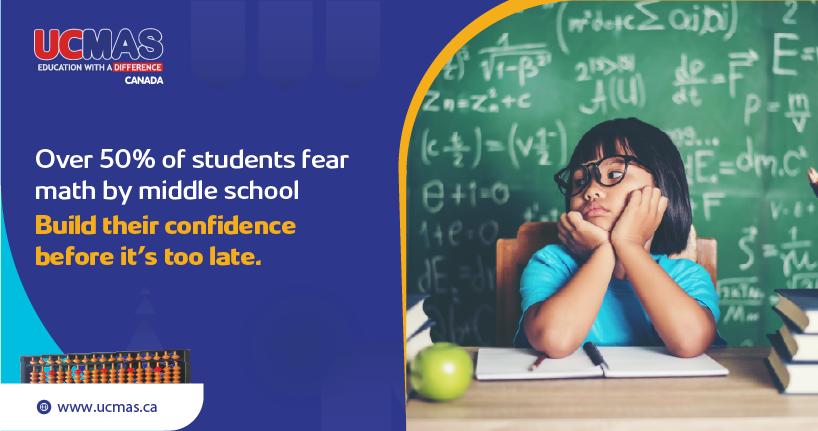
Most parents focus on reading first—but studies show that early numeracy skills actually play a bigger role in shaping how confident children feel in school. When kids develop strong math foundations early on, they don’t just perform better academically; they believe in their ability to learn, solve problems, and take on new challenges. This confidence becomes the fuel that carries them through every grade level.
Today, early numeracy skills are considered one of the strongest predictors of long-term academic success. And with the right activities and programs in place, children can build the numeracy development they need for a lifetime of learning confidence.

What Exactly Are Early Numeracy Skills?
Early numeracy skills are more than just counting or memorizing numbers. They shape the way children understand their world—quantities, patterns, shapes, and relationships—laying the groundwork for strong numeracy development as they grow.
1. Number Sense & Counting Skills
Number sense helps children understand “how many,” compare quantities, and recognize numbers in daily life. When these basic concepts are strong, math confidence becomes more natural because kids feel in control of numbers instead of intimidated by them.
2. Pattern Recognition & Logical Thinking
Patterns help children make sense of routines, sequences, and relationships. When they begin spotting patterns, they start using logic—an essential part of early numeracy skills that predicts higher problem-solving ability later on.
3. Spatial Awareness & Measurement Concepts
Kids explore shapes, sizes, and positions through play. Understanding “bigger,” “smaller,” “longer,” or “near” helps children build spatial intelligence, which directly contributes to numeracy development and strengthens brain pathways for future math learning.
4. Early Problem-Solving Skills
Sorting toys, sharing snacks, or grouping objects may seem simple—but these are powerful cognitive exercises. They teach children to analyze, compare, and reason, building the mental flexibility they need for long-term math confidence.
What Research Says: Early Numeracy as the Strongest Predictor of Academic Success
A landmark study (Duncan et al., 2007) found that early numeracy skills are the best predictor of academic performance up to middle school. Children with strong number foundations outperform their peers not only in math but across multiple subjects.
Math strengthens key neural pathways responsible for memory, attention, and reasoning. When children build numeracy development early on, their brains become more efficient at processing information in every subject.
Skills like working memory, cognitive flexibility, and self-control grow through math tasks. Sorting, counting, and classifying objects help build executive function—the mental system that supports planning, focus, and academic confidence.
How Strong Numeracy Skills Build Lifelong Academic Confidence
Confidence doesn’t appear out of nowhere—it grows every time a child successfully solves a problem, understands a concept, or overcomes a challenge. Early numeracy skills play a huge role in this.
1. Early Wins Reduce Math Anxiety Later On
Kids who start early with math understand concepts faster and avoid the frustration many older children feel later in school. The more positive experiences they have with numbers, the stronger their math confidence becomes.
2. Numeracy Improves Classroom Participation
When children trust their own thinking, they raise their hands more often and aren’t afraid to try challenging tasks. This positive participation boosts their self-esteem and encourages a healthy attitude toward learning.
3. Confidence Spreads Across All Subjects
Success in numeracy development boosts confidence in reading, science, and even social interactions. A child who believes “I can figure this out” carries that mindset into every part of school life.

How UCMAS Builds Powerful Early Numeracy Skills
UCMAS doesn’t just teach math—it shapes how children think. Through hands-on tools, visualization methods, and structured cognitive training, UCMAS helps kids build strong early numeracy skills that stay with them for life.
1. Hands-On Activities That Build Real Understanding
Using physical tools like beads, counters, and the abacus gives children a concrete way to understand numbers. This builds deeper numeracy development compared to memorizing formulas or worksheets.
2. Conceptual, Not Just Procedural Learning
At UCMAS, kids learn why math works, not just how to do it. This conceptual clarity helps them build genuine math confidence and reduces dependence on rote learning.
3. Age-Appropriate Programs That Grow with Your Child
UCMAS programs progress from simple number sense to visual math, logic, and advanced calculations. Each stage strategically strengthens cognitive skills and early numeracy skills in line with a child’s developmental needs.
4. Builds the Four Core Cognitive Skills
UCMAS Mental Math program enhances memory, concentration, visualization, and logical classification. These skills strengthen academic performance across all subjects—and lay a strong foundation for future learning.
Simple Strategies for Parents to Boost Numeracy at Home
Numeracy development doesn’t only happen in classrooms—small everyday moments offer endless opportunities to strengthen early numeracy skills.
1. Turn Everyday Moments into Counting Opportunities
Kids can count stairs, apples at the store, toys in the basket, or cars on the road. These simple moments build strong number sense naturally.
2. Play Pattern & Sorting Games
Sorting blocks, matching colors, and arranging beads help children recognize relationships between objects. This develops logical thinking—an essential part of math confidence.

3. Encourage Visual Thinking and Spatial Play
Puzzles, mental math worksheets, tangrams, and drawing shapes strengthen spatial awareness. These activities boost early numeracy skills without feeling like “math work.”
4. Use Math-Friendly Language
Use terms like “more,” “less,” “bigger,” “smaller,” “before,” and “after” during daily conversations. This language exposure supports numeracy development organically.
5. Read Math-Themed Storybooks
Books with shapes, numbers, and problem-solving plots make math feel familiar and fun. They spark curiosity and encourage early math confidence.
The UCMAS Advantage: Confidence That Lasts for Life
With a combination of abacus training, visualization, and cognitive development, UCMAS builds the confidence children need long after preschool or kindergarten.
UCMAS programs help children transition smoothly into school math, participate more actively, and enjoy learning instead of fearing it. UCMAS mental math goes beyond math tutoring and builds skills like focus, memory, and visual reasoning to offer kids powerful academic advantages throughout childhood.
Register today at UCMAS and give your child the confidence to thrive—not just in math, but in life.