





The first month back at school often feels like a fresh start. New teachers, new classmates, new schedules, and perhaps even new expectations. But while parents may focus on buying supplies, organizing uniforms, and getting children to school on time, something more important is happening during these first few weeks: habits are being formed.
The routines children establish during the first 30 days can influence how they approach homework, manage their time, respond to challenges, and balance school with life outside the classroom.
That is why some of the most useful back to school tips for parents have less to do with preparing for the first day and more to do with creating consistency throughout the first month.
At UCMAS, we believe that developing strong learning habits and cognitive skills can help children become more confident and independent learners. Here are seven habits worth establishing early.
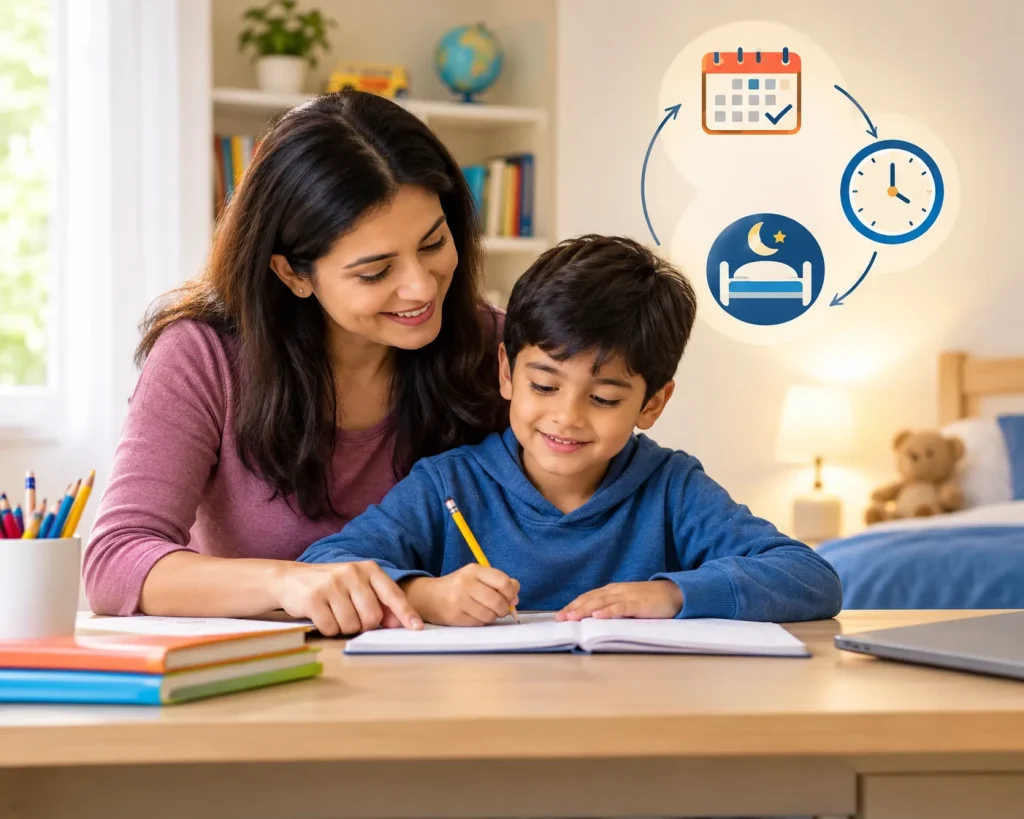
1. Make Mornings Predictable, Not Stressful
A rushed morning can set the tone for the rest of a child’s day.
Instead of deciding everything after waking up, create a simple morning routine that children can follow almost automatically. Waking up at a consistent time, getting dressed, eating breakfast, packing essentials, and leaving home on schedule can make mornings calmer.
For younger children, a visual checklist can make the process easier and encourage independence. Parents looking for age-appropriate routine ideas can explore this guide to creating a daily routine for a 5-year-old.
Good back to school preparation is not about making every morning perfect. It is about reducing unnecessary decisions so children can begin school feeling ready rather than rushed.
2. Create an After-School Reset
Children do not necessarily need to start homework the moment they walk through the door.
After spending several hours listening, learning, interacting, and following instructions, many children benefit from a short transition period.
This could include:
- Having a healthy snack
- Drinking water
- Talking about their day
- Spending some time outdoors
- Enjoying quiet, screen-free downtime
The goal is to help the brain shift from school mode to home mode before asking it to concentrate again.
A predictable school routine for kids can make this transition easier. Instead of negotiating what happens every afternoon, children gradually know what to expect.
3. Give Homework a Regular Time and Place
One of the most practical back to school tips is to establish homework expectations before poor patterns have time to develop.
Choose a relatively consistent homework window and a place with minimal distractions. The exact time will vary depending on the child’s age, school schedule, extracurricular activities, and energy levels.
More importantly, encourage children to take ownership. They can check their assignments, decide what to complete first, organize their materials, and mark tasks as finished.
Strong homework habits are not simply about getting today’s worksheet done. They teach children how to manage responsibilities independently.
4. Make Focus a Skill Children Practise
Parents often tell children to “focus,” but concentration itself is a skill that can be strengthened.
Short periods of focused work can be more productive than forcing a tired child to sit at a desk for hours. Try breaking larger tasks into smaller sections, removing unnecessary devices, and adding short breaks between demanding activities.
Activities that challenge children to concentrate, calculate, visualize, and respond accurately can also complement academic learning.
For example, the UCMAS Mental Math Program uses abacus and mental arithmetic activities designed to engage children actively while developing important cognitive abilities.
The first month of school is an excellent time to make focused learning part of the normal routine rather than something children practise only before tests.
5. Balance Academics With Extracurricular Activities
A successful school year should not mean school, homework, dinner, sleep, and repeat.
Sports, music, creative activities, clubs, and skill-development programs can give children opportunities to explore interests and develop abilities outside their regular curriculum.
The challenge is avoiding an overscheduled week.
Parents should look at the entire weekly calendar rather than considering each activity separately. Leave enough room for homework, sleep, family time, free play, and simply doing nothing occasionally.
Our guide on balancing school and extracurricular activities offers additional ideas for creating a healthier schedule.
Balance can help children enjoy enrichment without feeling as though every hour of their day has become another obligation.
6. Set Small Goals for the First Month
“Do well in school” is a goal, but it is difficult for a child to act on.
Instead, make goals specific and achievable.
A child might aim to finish homework before dinner four days a week, read for 15 minutes every evening, pack their school bag independently, practise mental calculations regularly, or ask the teacher for help when something is unclear.
These small wins can gradually develop better study habits for kids.
Parents can also involve children in choosing their goals rather than deciding everything for them. This creates greater ownership and gives children an opportunity to reflect on what they want to improve.
For more ideas, explore these learning goals for kids. Although goals are often associated with a new year, the beginning of a school year is another natural opportunity to reset.
7. Protect the Routine Once the Excitement Wears Off
The first week is usually the easy part.
New notebooks are exciting. Children may be enthusiastic about their new classroom, and parents are often highly organized.
Week three is where routines get tested.
That is why consistency matters more than perfection. If bedtime slips one evening or homework happens late one afternoon, simply return to the routine the following day.
Parents can also revisit strategies for rebuilding a child’s routine whenever schedules begin to drift.
The objective is not a rigid household timetable. It is to create enough predictability that good habits become easier to follow.

The First 30 Days Are About More Than Grades
The beginning of a school year gives families a valuable window to establish patterns that can last far beyond September.
Instead of concentrating only on marks, use these weeks to help children practise consistency, independence, time management, focus, and responsibility. These abilities can influence not only how children perform at school but also how confidently they approach challenges.
At UCMAS, learning goes beyond faster calculations. Through structured mental math and abacus practice, children have opportunities to exercise concentration, visualization, memory, and confidence while developing skills that can support their broader learning journey.
The best routines are not necessarily complicated. They are the ones children can repeat.
Want to add a structured, skill-building activity to your child’s new school routine? Book a UCMAS abacus session and discover how mental math practice can support focus, confidence, and learning skills.