



Christmas holidays are magical—but for parents, they often come with one quiet worry: too much screen time and too little meaningful engagement. The good news? You don’t need worksheets or study schedules to keep young minds active. With the right Christmas crafts for kids, learning slips in naturally.
Simple, festive activities can quietly strengthen math skills, logical thinking, focus, and creativity—all while your child thinks they’re just having fun. These holiday learning crafts turn the season into a time of growth, not guilt.
Why Learning Through Crafts Works So Well
Crafts engage the brain in a way that traditional learning often can’t. When children build, design, cut, count, and assemble, they activate multiple cognitive skills at once—without pressure.
Also, digital dependence during the holiday season is very common, so it is important to improve your child’s screen time habits and engage them in other creative activities. Learning through crafts can help children:
1. Strengthen Their Understanding with Hands-on Activities
When kids physically touch and manipulate materials, concepts stick better. Counting ornaments or measuring paper strips helps children experience numbers rather than memorize them, making math crafts for kids far more effective than drills.
2. Bring Together Their Creativity and Logic
Crafts may look artistic, but behind the scenes, children are planning steps, recognizing patterns, and solving problems. Creativity fuels logic, and logic gives structure to creativity—both essential for learning.
3. Build Confidence Through Low-Pressure Learning
There’s no “wrong answer” in crafting. This relaxed environment reduces fear of failure and builds confidence, allowing kids to experiment, think independently, and enjoy learning during the holidays.
10 Christmas Crafts That Teach More Than You Think
These festive ideas look playful on the outside, but each one quietly builds essential brain skills. The beauty of holiday learning crafts is that kids never realize they’re learning.
1. Counting Christmas Ornaments
Ask children to sort ornaments by color, size, or shape before counting them. You can also challenge them to group ornaments in tens or create skip-counting patterns, strengthening early multiplication skills without formal practice.
2. DIY Advent Calendar with Numbers
Instead of just opening a window, add a simple number challenge inside—like counting backwards, solving a tiny addition, or matching quantities. This keeps excitement high while reinforcing daily number familiarity.
3. Shape-Based Christmas Tree Craft
Encourage kids to identify and name each shape before assembling the tree. Older children can experiment with symmetry by creating identical shapes on both sides, subtly introducing balance and spatial planning.
4. Snowman Assembly Craft
Have children explain the order in which they’re assembling the snowman and why. This verbal reasoning strengthens logical sequencing and helps them understand structured thinking in a fun, visual way.
5. Christmas Pattern Garland
Once kids grasp basic patterns, ask them to predict what comes next or design their own repeating sequence. This builds anticipation, logical prediction, and confidence in recognizing mathematical patterns.
6. Santa’s Maze Craft
Let children trace multiple possible paths before choosing one, discussing why some routes don’t work. This improves problem-solving, strategic thinking, and patience through trial and adjustment.
7. Origami Christmas Decorations
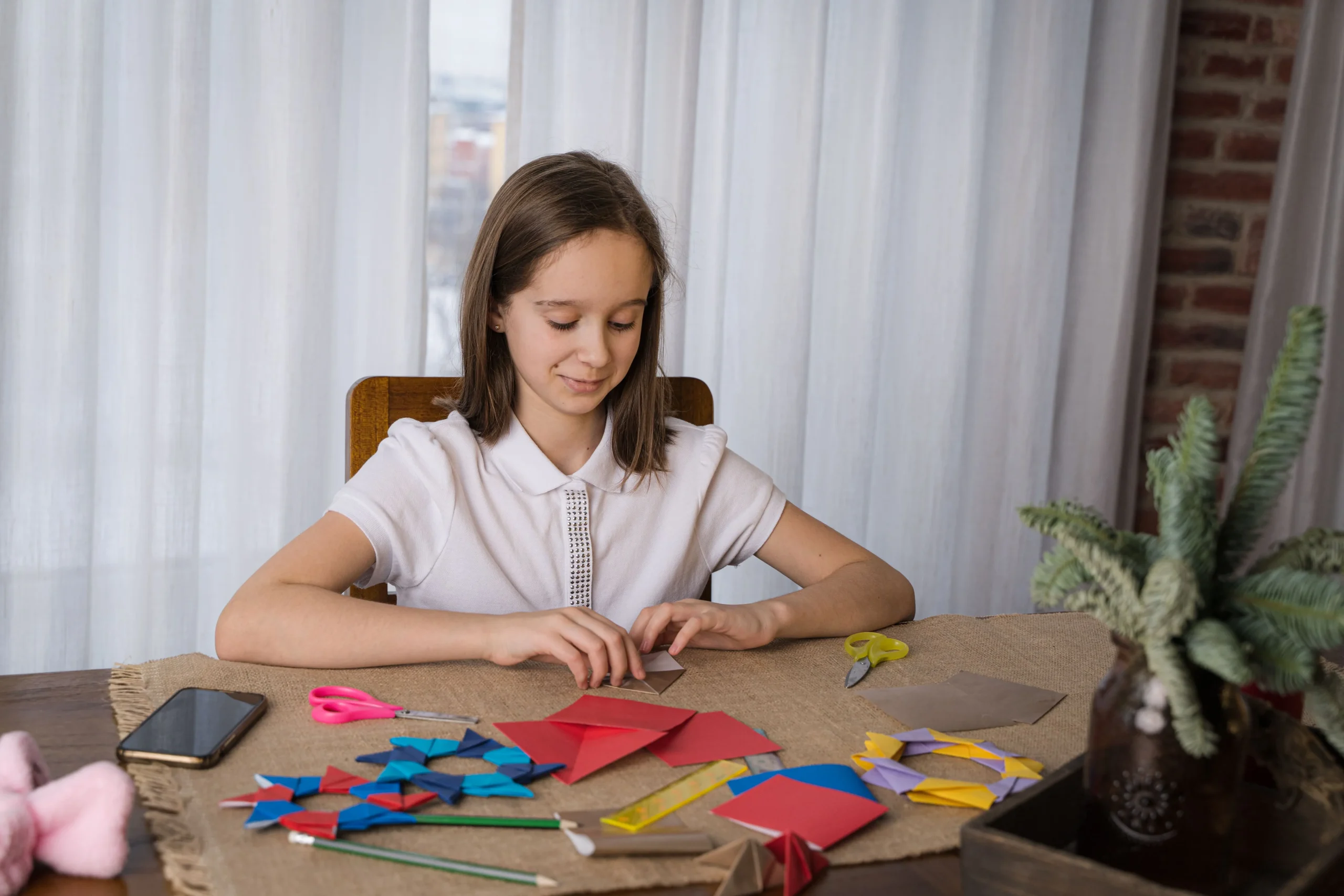
Origami requires children to follow steps carefully, improving focus and fine motor control. As they visualize folds before making them, they also strengthen mental rotation and spatial imagination.
8. Color-Coded Candy Cane Craft
Introduce simple rules like “every third stripe must be red” or “no two same colors together.” Following these constraints enhances logical thinking and attention to structured instructions.
9. Build-a-Holiday Scene Story Craft
Ask children to retell the story they created or change one element and adapt the story. This improves memory recall, sequencing, and flexible thinking while boosting creative confidence.
10. Measure & Decorate the Christmas Tree
Before measuring, ask children to estimate lengths or distances and then compare their guesses with actual measurements. This builds estimation skills and helps them understand real-world applications of math.
Skills Kids Develop Through These Crafts
While kids enjoy cutting, pasting, and decorating, their brains are building powerful skills that support long-term academic success.
1. Stronger Number Sense & Math Confidence
Repeated exposure to counting, measuring, and patterns builds comfort with numbers. Over time, these math crafts for kids reduce math anxiety and improve confidence.
2. Improved Focus & Working Memory
Crafts require children to remember steps, follow instructions, and stay engaged. This strengthens working memory and attention span—skills that directly impact classroom learning.
3. Better Logical & Critical Thinking
From deciding the next pattern piece to solving a maze, children constantly reason and adjust. Logical thinking becomes second nature.
4. Enhanced Creativity & Visualization
Visualizing the final craft before starting improves imagination and mental imagery. These skills later support reading comprehension and mental math.
Bringing This Learning Style Beyond the Holidays
The cognitive skills children build through festive crafting don’t disappear when Christmas ends. In fact, these are the same foundational abilities that support strong academic performance – especially in math.Programs like UCMAS are built around strengthening number sense, visualization, focus, and logical thinking in a structured, age-appropriate way. If you enjoyed blending fun and learning at home, you may also enjoy exploring seasonal initiatives like UCMAS’s festive programs, such as their Santa Math Workshop for a Meaningful Holiday, which extend this playful learning approach.
Make This Christmas a Gift for Your Child’s Brain
Christmas memories last a lifetime—but so do the skills your child builds today. These Christmas crafts for kids give your child more than just the festive fun—it nurtures their confidence, curiosity, and cognitive strength.
If you’d like to continue building these essential skills beyond the holidays, explore how UCMAS helps children develop strong math foundations, focus, and mental agility through proven brain-based learning.
Visit your nearest UCMAS center today or request an information session online to turn joyful learning into a year-round habit.