




For years, academic performance has been one of the easiest ways to measure a child’s progress. Good grades can reflect effort, understanding, and consistency. But as children grow into a rapidly changing world, success will require much more than remembering information and performing well on tests.
Tomorrow’s workplaces and communities will increasingly value people who can think critically, solve unfamiliar problems, communicate ideas, collaborate with others, manage challenges, and keep learning.
That doesn’t mean academic learning is becoming less important. Instead, children need a broader foundation that combines knowledge with practical abilities. Programs such as UCMAS can complement traditional education by giving children opportunities to strengthen cognitive and personal skills through structured learning.
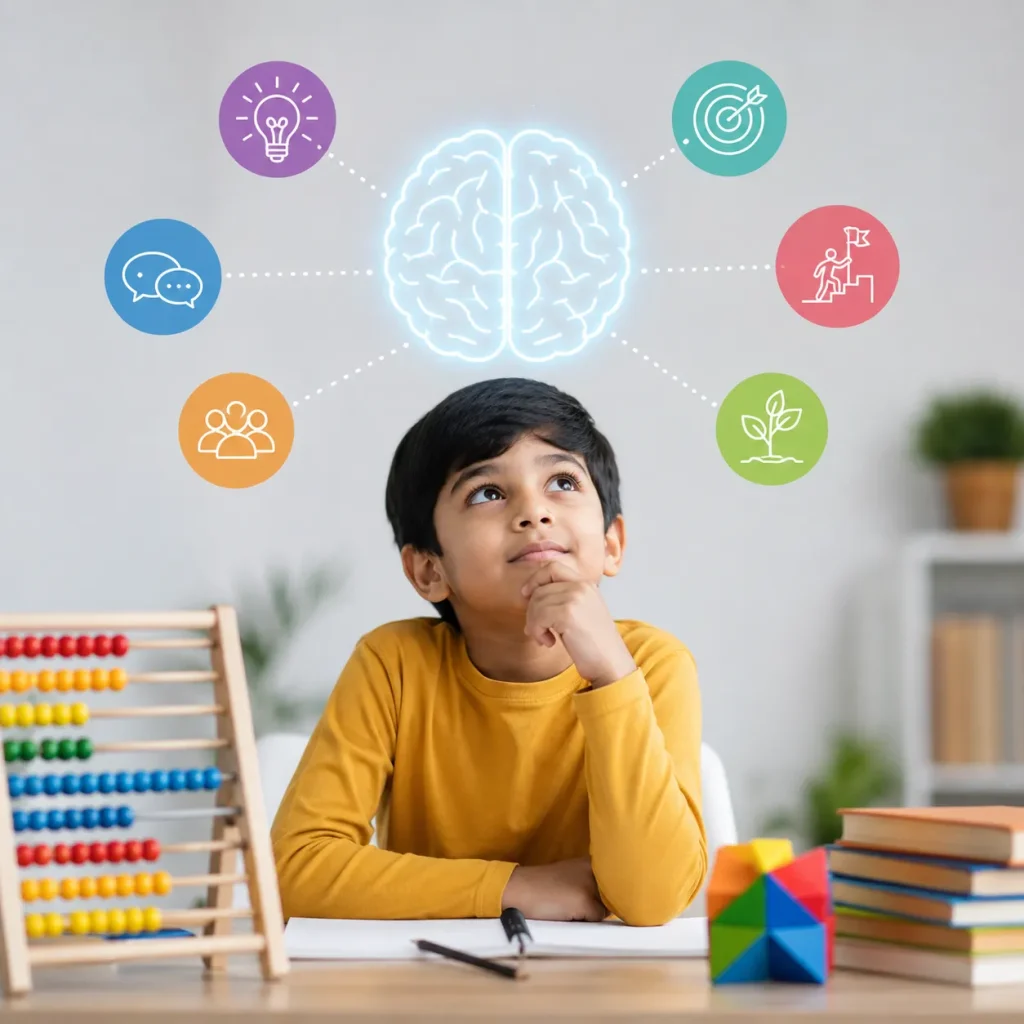
Skills That Matter Beyond Academic Grades
So, here are some skills that parents must pay attention to:
1. Problem-Solving and Critical Thinking
Children encounter problems every day—from figuring out how to complete a difficult assignment to deciding how to approach a disagreement with a friend.
Learning how to break a challenge into smaller parts, consider different possibilities, identify patterns, and make decisions can help children become more independent thinkers.
Developing problem solving skills for kids is not about giving them more worksheets. It is about creating opportunities where they need to think, make choices, test ideas, and learn from outcomes.
Mental math activities can be particularly useful because children are encouraged to process information, identify relationships between numbers, and arrive at answers using reasoning rather than simply relying on a calculator.
2. Focus and the Ability to Concentrate
Information is everywhere. Notifications, entertainment, social media, games, and multiple digital distractions compete for a child’s attention every day.
That makes sustained concentration an increasingly valuable skill.
Structured focus classes for children can give kids an environment where they practise listening carefully, remembering instructions, completing tasks, and maintaining attention for longer periods.
The goal isn’t simply to make children sit quietly. It is to help them gradually develop the ability to direct their attention toward something meaningful—even when the task becomes challenging.
3. Confidence to Try, Fail, and Try Again
Confidence isn’t about believing that you will always get the right answer. It is about believing that you can handle the process of finding one.
A child who is afraid of making mistakes may avoid difficult tasks altogether. On the other hand, a child who sees mistakes as part of learning is more likely to experiment, ask questions, and keep trying.
This is why confidence building for kids should be connected to real experiences. When children successfully work through something they initially found difficult, they develop evidence that effort can lead to improvement.
UCMAS also explores how structured learning can support broader personal development, including communication, confidence, and other skills beyond academics. Its approach to building soft skills in kids can complement the skills children develop at school.
4. Mental Agility and Numerical Thinking
Being comfortable with numbers is useful far beyond mathematics class.
Children use numerical thinking when comparing prices, understanding time, estimating quantities, interpreting information, and making everyday decisions.
Mental math for kids can help strengthen numerical fluency while encouraging children to process information quickly and accurately.
The UCMAS mental math program focuses on developing mental calculation abilities through structured practice. Over time, children can learn to visualise calculations and work with numbers more efficiently.
This kind of learning can also contribute to a broader ability to process information and approach challenges systematically.
5. Learning How to Learn
The world children enter as adults may look very different from the world they know today. Technologies, careers, tools, and even entire industries can change.
That makes the ability to learn new things especially valuable.
Rather than focusing only on whether children know a particular answer today, parents can encourage them to ask:
- How did you arrive at that answer?
- What could you try differently?
- What did you learn from the mistake?
- Where else could you use this idea?
These questions help shift children from passive learning toward active learning.
The UCMAS abacus math program is one example of structured enrichment where children practise skills progressively rather than simply memorising isolated answers.
6. Adaptability and Emotional Resilience
Not every challenge will have a clear answer. Children will experience difficult assignments, disappointing results, changing friendships, competitions they don’t win, and situations that don’t go according to plan.
Resilience helps them respond constructively.
Children can build resilience when they learn that difficulty does not automatically mean failure. Encouraging them to pause, understand what went wrong, adjust their approach, and try again can make challenges feel more manageable.
A well-designed enrichment environment can support this process by giving children appropriately challenging tasks and allowing them to experience both mistakes and progress.
7. Communication and Collaboration
Future success will rarely depend on working completely alone.
Children need to express ideas clearly, listen to others, ask questions, give and receive feedback, and work toward shared goals.
These abilities begin developing through everyday experiences—group projects, conversations, games, extracurricular activities, and structured learning environments.
For parents looking to add enrichment without overloading a child’s schedule, an after-school program for kids can provide another setting where children learn outside the traditional classroom while developing academic and personal skills.
8. Creativity and Independent Thinking
Creativity is not limited to drawing, music, or storytelling. It also means being able to look at a problem from a different angle.
A creative thinker might find a new way to organise information, approach a difficult question, design a solution, or explain an idea.
Parents can encourage this by allowing children to explore different approaches instead of always expecting one “correct” method.
The combination of creativity and logical thinking can become especially powerful. Children learn not only to generate ideas but also to evaluate whether those ideas actually work.
Building Skills That Last Beyond the Classroom
Academic achievement and future-ready skills don’t have to compete with each other.
In fact, the strongest learning experiences can support both.
A child who develops concentration may find it easier to study. A child who learns to approach mistakes constructively may become more resilient when facing a difficult subject. A child who strengthens mental calculation and logical thinking may become more comfortable tackling unfamiliar problems.
The important thing is to look beyond the report card and consider the abilities children are developing underneath their academic results.
- Are they becoming more independent?
- Do they persist when something is difficult?
- Can they explain their thinking?
- Are they comfortable asking questions?
- Can they concentrate on a task?
- Do they have the confidence to try again after making a mistake?
These are the kinds of questions that can help parents think about education from a broader perspective.
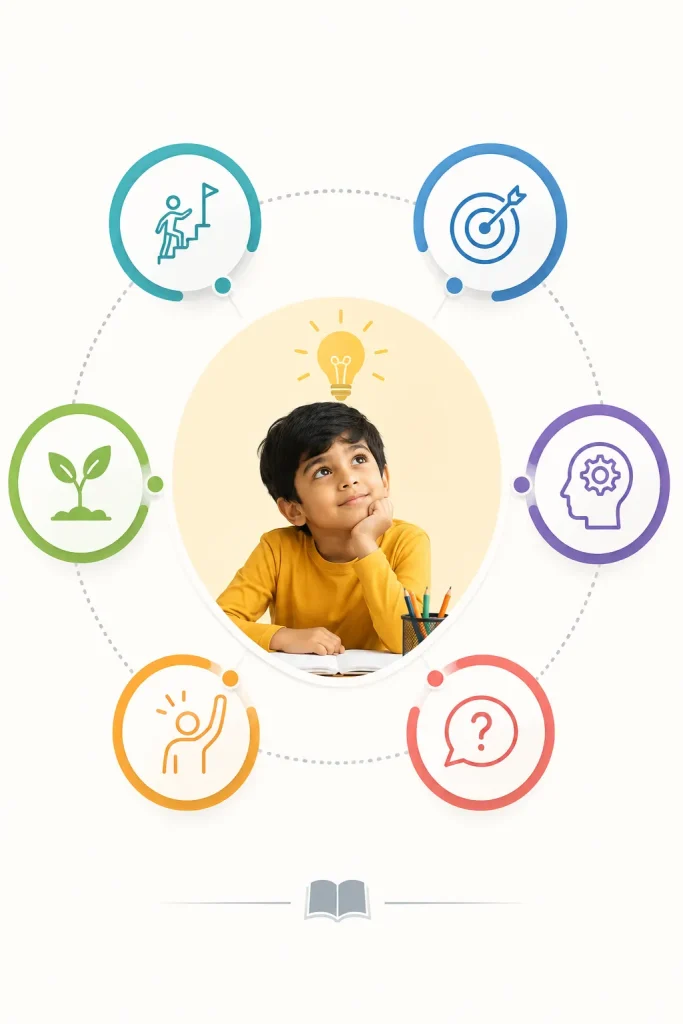
A Future-Ready Child Is More Than a Score
Grades will continue to matter. They can reflect knowledge, effort, and academic progress. But they cannot capture every quality that can help a child navigate an unpredictable future.
Problem-solving, focus, confidence, adaptability, resilience, communication, creativity, and mental agility are skills that children can practise long before they enter the workforce.
The earlier these abilities become part of everyday learning, the more naturally children can carry them into school, relationships, and eventually their careers.
For parents exploring structured learning opportunities, UCMAS offers programs designed to make cognitive development an engaging part of a child’s learning journey.
Rather than asking only, “What grade did my child get?”, it may be worth asking a bigger question:
“What kind of thinker, learner, and problem-solver is my child becoming?”
That answer could matter long after the report card is forgotten.
Give your child an opportunity to strengthen essential learning skills through a structured and engaging approach. Book an abacus session with UCMAS and explore how the right learning experience can help prepare your child for challenges beyond the classroom.