




Every spring, thousands of Ontario parents feel the same tension.
The Ontario EQAO exam is coming up. Practice papers are printed. Worksheets are stacked. And suddenly, math feels heavier than usual.
If you’ve been searching for better EQAO math preparation, here’s something important to understand: EQAO is not just about knowing formulas. It’s about thinking clearly under pressure.
That’s where mental arithmetic training changes everything.
At UCMAS, parents across Canada are discovering that strengthening how a child thinks about numbers is far more powerful than last-minute cramming. Let’s break down why.

What Is EQAO — And What Does It Actually Measure?
Most parents assume EQAO is just another school math test. In reality, it’s designed to measure greater cognitive skills.
Grades That Write EQAO Math
The Ontario EQAO exam is administered in:
- Grade 3
- Grade 6
- Grade 9 (Academic and Applied streams)
Students answer multiple-choice and open-response questions. That means they must not only calculate correctly but also explain their thinking clearly.
And that’s where many students struggle.
Core Skills Tested in EQAO Math
EQAO doesn’t just test whether your child can multiply. It evaluates:
- Number sense and operations
- Multi-step problem solving
- Logical reasoning
- Mathematical communication
- Speed and working memory
In short, it tests how efficiently your child processes math — not just whether they’ve memorized procedures.
Why Students Struggle on EQAO
Here’s what typically happens:
- A child knows the method. But they calculate slowly.
- They understand the concept. But they panic under time pressure.
- They solve correctly at home. But freeze in exam conditions.
The issue isn’t intelligence. It’s fluency.
And fluency is exactly what mental math for kids develops.
What Is Mental Arithmetic Training?
Before we connect it to EQAO success, let’s clarify what this actually means.
Understanding Mental Math vs. Regular Classroom Math
Classroom math often focuses on written steps. Teachers explain procedures. Students practice on paper.
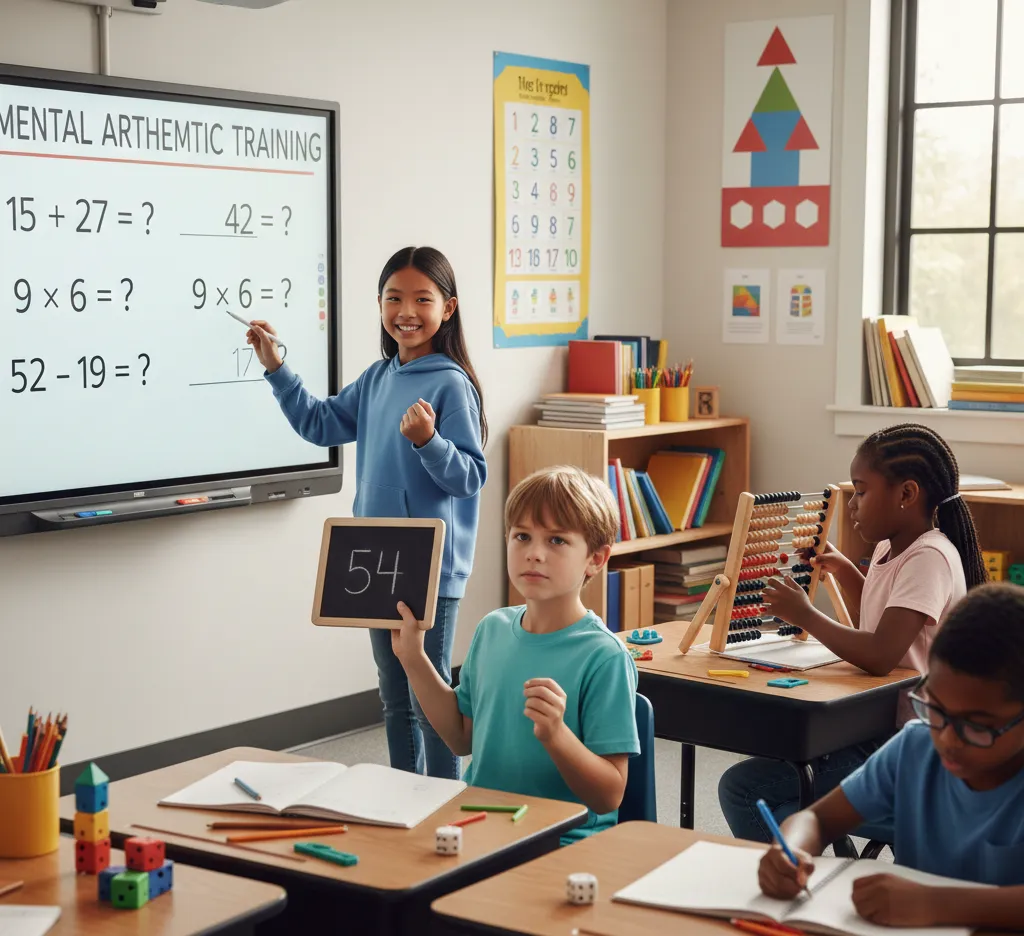
Mental arithmetic training, however, strengthens the brain’s ability to calculate internally. It develops speed, accuracy, and structured thinking without relying on fingers or scratch work.
This is not rote memorization. It is cognitive conditioning.
How Abacus-Based Mental Arithmetic Works
Programs like UCMAS use the abacus as a foundation. Children first learn with a physical tool. Over time, they begin visualizing the abacus in their minds and calculating mentally.
The Abacus is a scientifically proven learning tool, and abacus-based learning methods have been widely studied for their impact on cognitive development.
Abacus learning engages both sides of the brain and strengthens neural pathways related to memory, attention, and processing speed.
The Skills Mental Arithmetic Builds
Through structured mental arithmetic training, children develop:
- Rapid calculation speed
- Strong number sense
- Visual memory
- Concentration
- Mental endurance
These are precisely the skills the Ontario EQAO exam evaluates.
How Mental Arithmetic Improves Speed and Accuracy on EQAO
Now let’s connect the dots.
EQAO is timed. It requires sustained focus. And it includes multi-step reasoning.
Faster Basic Calculations = More Time for Word Problems
When children hesitate on multiplication or long division, precious minutes disappear.
With mental math for kids, basic operations become automatic. That means:
- No finger counting
- No re-checking simple math repeatedly
- More time available for complex word problems
In effective EQAO math preparation, time management is everything.
Stronger Working Memory for Multi-Step Questions
Many EQAO questions require holding several numbers in mind while processing instructions.
Mental arithmetic strengthens working memory. Children become comfortable juggling numbers internally without feeling overwhelmed.
That directly improves performance on multi-step reasoning questions — one of the biggest pain points for students.
Reduced Math Anxiety Through Confidence
Confidence is a performance multiplier.
When children calculate smoothly, they feel in control. That calmness reduces exam anxiety and improves clarity of thought.
In fact, many parents report that consistent mental arithmetic training doesn’t just improve marks — it changes their child’s relationship with math.
Better Accuracy Under Timed Conditions
Speed alone isn’t enough. Accuracy matters.
Mental discipline, repetition, and structured progression reduce careless errors. Students learn to think methodically even under time pressure — a critical skill during the Ontario EQAO exam.
If you’re looking for practical EQAO math tips, strengthening automaticity is one of the most effective strategies.
The Link Between Number Fluency and EQAO Success
Here’s something many parents don’t realize:
Number fluency is one of the strongest predictors of standardized math performance.
What a Long-Term Program Builds Over Time
Long-term UCMAS programs deepen skills, improve speed and accuracy, and help children reach advanced levels of mental math for kids through consistent practice.
Why Automaticity Matters
When a child struggles with basic calculations, their brain becomes overloaded.
Instead of focusing on reasoning, their mental energy goes toward solving 8 × 7.
With strong number fluency developed through mental arithmetic training, simple math becomes automatic. That frees up cognitive space for analysis and explanation.
And that’s exactly what EQAO rewards.
How Strong Number Sense Improves Word Problem Performance
Word problems often intimidate students.
But children trained in mental math quickly estimate, break numbers apart, and identify patterns. They recognize irrelevant details and focus on the structure of the question.That ability transforms how they approach EQAO. Read this guide for more actionable tips on how to get a good score in EQAO.
From Practice to Performance
Consistency builds neural efficiency.
Over time, repeated mental calculations strengthen the brain’s processing speed and accuracy. This isn’t short-term exam prep. It’s long-term cognitive development.
If you’re serious about EQAO math preparation, investing in foundational skills early makes a measurable difference.
What Parents Can Do Right Now to Support EQAO Preparation
The good news? You don’t need to wait until Grade 3 or Grade 6 to act.
Start Early — Not Just in Test Year
Cognitive development takes time. Children who begin structured mental math for kids programs early often enter EQAO years with confidence already built.

Focus on Skill-Building, Not Worksheet Volume
More worksheets don’t always mean better results. Worksheets test knowledge. Skill-building strengthens thinking ability.
If you’re exploring structured development methods, here are some evidence-based ways to enhance the math skills of your children.
Incorporate Structured Mental Arithmetic Training
Consistency is key.
Professional programs ensure:
- Progressive levels
- Increasing complexity
- Measurable improvement
That structure makes mental arithmetic training far more effective than casual practice at home.
Build Confidence Alongside Competence
- Celebrate progress.
- Encourage speed with accuracy.
- Normalize mistakes as learning tools.
A calm, confident child performs far better during the Ontario EQAO exam than a stressed one.
Why Structured Mental Arithmetic Programs like UCMAS Make the Difference
Not all mental math practice is equal. UCMAS follows a progressive curriculum design that ensures that children master foundational skills before advancing. This step-by-step progression prevents gaps and builds durable competence.
Their brain development programs are intentionally designed to develop:
- Visualization
- Concentration
- Memory retention
- Logical sequencing
This is not just academic tutoring. It’s cognitive training. While improved EQAO math preparation is a major advantage, the benefits extend further.
Students often show:
- Improved academic confidence
- Faster learning across subjects
- Better focus in class
- Stronger independent problem-solving skills
And those benefits continue well beyond the EQAO year.
Strong EQAO Performance Is Built Before Test Day
The truth is simple. The Ontario EQAO exam does not reward memorization alone. It rewards clarity, fluency, reasoning, and confidence.
And those traits are built through consistent mental arithmetic training.
If you’re searching for meaningful EQAO math tips, the most powerful strategy is not last-minute drilling. It’s strengthening the brain’s ability to process numbers quickly and accurately.
At UCMAS, children develop the speed, accuracy, and cognitive confidence that standardized assessments demand — and that lifelong learning requires.
If you want your child to approach EQAO with confidence instead of stress, now is the time to act.
Request an information session for UCMAS today and discover how structured mental arithmetic training can support your child’s success.