Please wait...



Have you seen those child prodigies solving complex calculations in seconds—without a calculator, paper, or even
counting on their fingers?
That’s what mental math does to you.
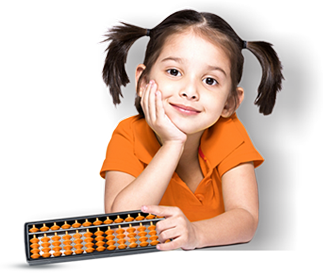
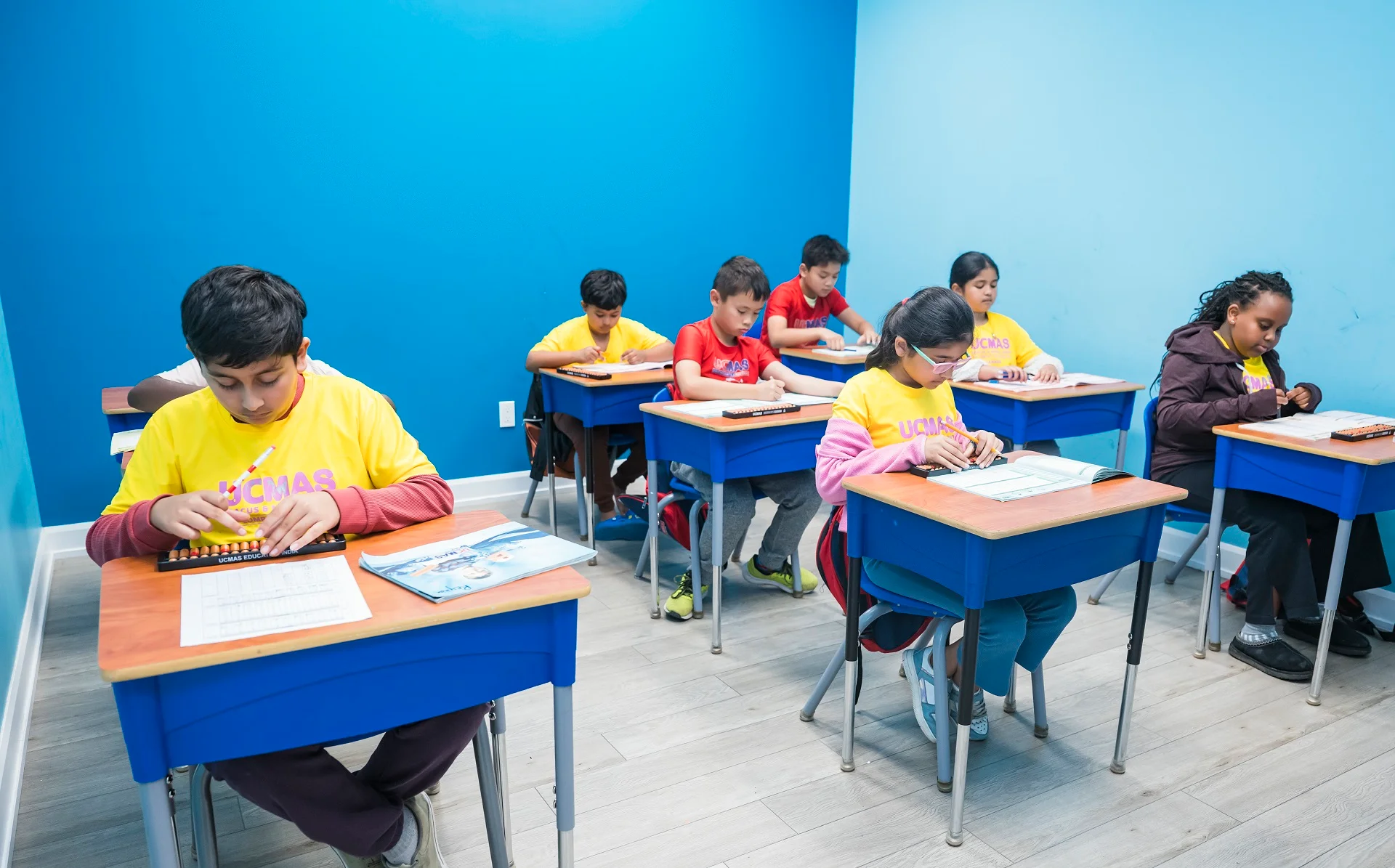
Mental math at UCMAS starts with a 2,000-year-old tool called the abacus. Initially, children physically move the
beads to perform calculations. But then something magical happens – the physical abacus takes the backseat and
children imagine a virtual abacus in their minds, manipulating the beads mentally at lightning speed while their
little brains start forming new neural pathways.
So, the astonishing calculation speed that you see is not just the end result; it’s a sign of their increasing
mental fitness, improved concentration, photographic memory, and the laser-sharp focus that they develop during
this mental math program.
At UCMAS, we don’t make children solve their math problems – we rewire their brain architecture.
Every child is a genius with untapped potential waiting to be unlocked. At the UCMAS Abacus mental math program,
we don’t just teach them what to calculate, but also how to think. While the traditional education system
fundamentally works on the left/logical side of the brain, UCMAS simultaneously activates both hemispheres of the
brain.
Our bilateral brain training is backed by neuroscience. We activate the logical side through arithmetic and the
creative side through abacus visualization. While mental math is the visible outcome, the real transformation
happens across multiple cognitive domains as children also learn:

They begin to calculate with lightning speed and develop an unwavering focus. Every bead movement trains their
brain to lock in, tune out noise, and stay engaged.

They see a mental abacus with beads moving and numbers dancing in their imagination, helping them develop
creativity, imagination, and better problem-solving skills.

Abacus mental math strengthens both working memory and long-term memory, helping children recall concepts faster
and manage multiple pieces of information efficiently.

Spotting patterns, catching errors, and processing information precisely—mental math helps kids become sharper
observers, better test-takers, and stronger thinkers.
Starting with an Abacus and eventually progressing to Mental Math, these young “math magicians” learn to perform
arithmetic calculations of up to 10 digits entirely in their head—without calculators or pencil and paper. At
UCMAS mental math classes, we employ unique abacus techniques that make children intellectually sharper and
emotionally resilient, while also supporting their overall physical and brain development.
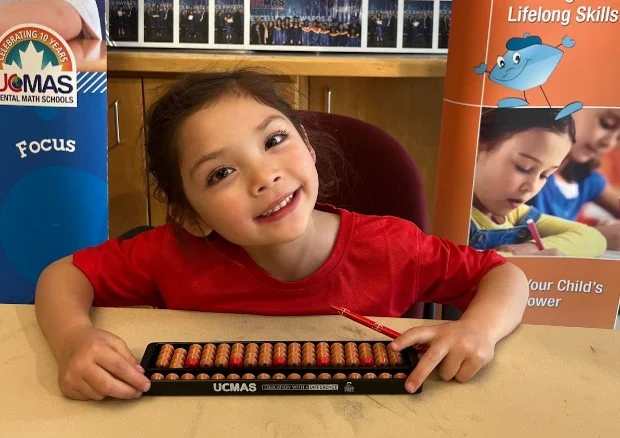
Know how UCMAS Mental Math builds brain power beyond the classroom.
What is mental math?
What does “mental math with abacus” mean?
How does abacus-based mental math benefit my child’s brain development?
What are the benefits of mental math for kids beyond just calculation speed?
At what age can a child start learning abacus / mental math?
How long does it take to see results from mental math training?
Can mental math help children struggling with math in school?
Is mental math still useful even though calculators and devices are widely available?
What skills does mental math help build besides math-for life and learning?