



Education franchising isn’t just about replicating a brand; it’s about reproducing learning experiences, fostering academic growth, and nurturing community trust. But what makes some education franchise models flourish, while others struggle? The answer lies in training and support, and the science that underpins them.
In this blog, we understand the psychological, pedagogical, and operational science that empowers franchisees to deliver exceptional learning outcomes. This journey will help you understand why training matters, how support systems work, and what scientific principles make them effective.

What Is Education Franchising?
Before we get scientific, let’s clarify the concept.
Education franchising is a business model where an educational organization (the franchisor) licenses its brand, curriculum, and methodology to local operators (franchisees). These franchisees then deliver the educational services in specific territories.
The magic isn’t just in the curriculum; it’s in how that curriculum is consistently delivered across locations. That’s where training and support step in.
Why Training and Support Matter in Education Franchising
In traditional franchising, training and support aim to standardize operations, such as how to make a product, serve a customer, manage inventory, and protect the brand. In education franchising, however, training and support must do far more:
1. Ensure Instructional Fidelity
Franchisees must deliver education services that are pedagogically sound and aligned with the franchisor’s intended learning outcomes.
2. Promote Continuous Improvement
Educational standards evolve. Research on learning science, child development, assessment theory, and curriculum design changes over time. Support must help franchisees adapt.
3. Guarantee Consistency Across Locations
A learner in one city should receive the same quality of instruction as a learner in another.
The Science of Training: More Than Just Manuals
If someone handed you a 300-page operations manual and said, “Read this, and you’re ready to run an education center,” would you feel confident?
Probably not.
Many assume training means handing over manuals and recorded lectures. Education franchise training is about building capability, not distributing information. Effective programs are grounded in adult learning science, cognitive psychology, and performance research. Franchisees are not passive students; they are entrepreneurs and educators who must apply knowledge immediately. Scientific training design ensures that they do not just understand the curriculum but can confidently deliver it, manage operations, and uphold brand standards. Let’s understand more.
Adult Learning Theory in Practice
The principles of andragogy, popularized by Malcolm Knowles, explain why adults require a different training approach than children. Adults are self-directed, goal-oriented, and motivated by relevance.
In franchising, this means training must connect directly to real-world classroom and business situations. Instead of abstract theory, franchisees engage with case studies, peer discussions, and practical simulations. Their prior experiences, whether in teaching or corporate roles, are treated as assets, not ignored.
Clear competency milestones replace passive completion certificates. When adults see immediate application and measurable progress, engagement deepens, and learning retention improves significantly.
Managing Cognitive Load for Better Retention
Cognitive Load Theory, introduced by John Sweller, highlights the limits of working memory. Overloading franchisees with excessive information reduces retention and increases anxiety.
Effective training minimizes unnecessary complexity and organizes information into manageable segments. Concepts are introduced gradually, reinforced over time, and paired with visual aids and practical exercises. Instead of compressing multiple strategies into a single session, training is spaced across weeks to allow integration and reflection.
This structured pacing reduces overwhelm and builds confidence. When learning feels manageable, franchisees are more likely to internalize systems and apply them consistently in real environments.
Active Learning as Skill Development
Research consistently shows that active learning produces stronger outcomes than passive instruction. In education franchising, this translates into role-plays, simulations, practice sessions, and structured feedback.
Experiences like rehearsing parent interactions, conducting mock classes, and testing operational systems before implementation create safe environments for making mistakes and refining skills. Feedback is specific and actionable, helping individuals adjust behavior and improve performance.
Through repeated practice, knowledge becomes habit. Active learning ensures that franchisees are not merely informed about best practices but are fully prepared to execute them confidently in real classrooms and centers.

The Role of Ongoing Franchise Support Systems
An education franchise lays the foundation in franchising, but sustained excellence depends on what happens after onboarding. Education is a dynamic field shaped by evolving research, curriculum changes, student diversity, and parental expectations. Without structured and continuous support, even the most comprehensive initial training can fade in effectiveness over time.
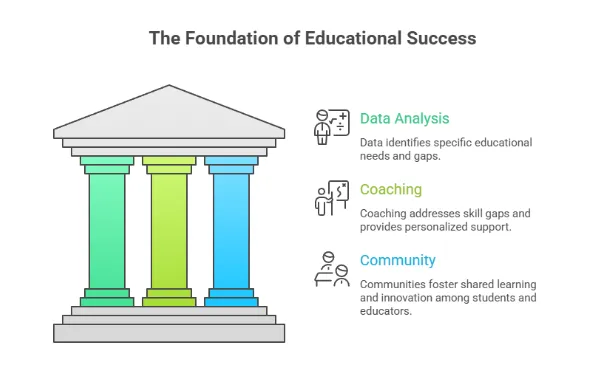
Franchise support systems ensure that franchisees do not operate in isolation. Below are three pillars that define robust ongoing support systems in education franchising.
1. Coaching and Mentoring
Research in instructional improvement consistently highlights coaching as one of the most powerful tools for enhancing teaching quality. Unlike traditional workshops, coaching is job-embedded, contextual, and ongoing. It focuses on applying strategies in real classrooms or learning environments rather than merely understanding them theoretically.
What Coaching Looks Like in Practice
Regional Instructional Coaches
Franchisors often deploy regional experts who conduct site visits to observe instruction, evaluate implementation fidelity, and provide actionable feedback. These visits are not audits alone; they are collaborative improvement sessions designed to refine practice.
Virtual Mentoring and Support
With advancements in technology, mentoring can occur through video conferencing, digital classroom observations, and real-time consultations. Virtual support expands access to expertise, especially for franchisees in remote or newly established markets.
Peer Coaching Networks
Franchisees can engage in structured peer observations or facilitated sharing sessions. When educators analyze each other’s strategies and challenges, they build collective capacity while strengthening professional relationships.
Long-Term Impact
Coaching fosters instructional consistency across franchise locations. More importantly, it builds franchisee confidence and competence, reducing variability in student experience. Over time, centers supported by consistent coaching demonstrate improved student outcomes, stronger parent satisfaction, and higher staff retention.
2. Data-Driven Support
Education franchising operates at the intersection of pedagogy and business. Sustainable growth requires decisions grounded in measurable evidence rather than assumptions. Data-driven franchise support systems transform raw numbers into strategic insights that guide targeted interventions.
The Science of Feedback and Performance
Educational research emphasizes the role of feedback loops in performance improvement. When individuals receive timely, relevant data about their outcomes, they are more likely to adjust their behaviors effectively. In franchise systems, data serves as an objective compass for growth.
Key Data Streams in Education Franchising
Student Achievement and Assessment Data
Tracking learning progress reveals whether instructional strategies are achieving intended outcomes. Patterns in assessment results can highlight curriculum strengths or areas requiring refinement.
Franchisee Performance Metrics
Operational indicators, such as enrollment growth, staff development participation, or curriculum implementation rates, offer insights into overall center performance.
Attendance, Retention, and Satisfaction Indicators
High retention and positive feedback often signal strong instructional quality and parent engagement. Conversely, declining retention may indicate areas where support is needed.
Operational Benchmarks
Standardized benchmarks ensure brand consistency across all locations. Comparing performance against established standards allows franchisors to identify both high-performing centers and those needing additional guidance.
Importantly, effective data-driven systems are not punitive. Instead, they foster a culture of growth and transparency. When franchisees view data as a tool for improvement rather than a basis for judgment, engagement and collaboration increase significantly.
3. Communities of Practice
Education is inherently collaborative. Decades of research in social learning theory demonstrate that individuals learn more effectively in interactive environments where knowledge is shared and co-constructed.
Communities of practice extend learning beyond formal coaching or structured training sessions. They create networks where franchisees continuously exchange insights, troubleshoot challenges, and celebrate successes.
How Communities Form in Franchise Systems
Online Collaboration Platforms
Digital forums and shared knowledge bases allow franchisees to post questions, share classroom strategies, and access best practices anytime.
Annual Conferences and Regional Meetups
In-person gatherings strengthen professional relationships and deepen knowledge exchange. Workshops, panel discussions, and keynote sessions provide exposure to new research and trends.
Facilitated Discussion Groups
Specialized topic groups, focused on areas such as curriculum innovation, student engagement strategies, or parent communication, create focused dialogue and expertise development.
Communities reduce professional isolation, especially for franchisees managing independent centers. They create safe spaces for candid discussions about challenges and foster peer-driven innovation.
The Impact of Research-Based Education Franchise Training
When training and franchise support systems are grounded in research and scientific principles, their impact extends far beyond operational efficiency. Evidence-based training creates structured, replicable processes that translate into measurable outcomes across the franchise network.
1. Improved Consistency and Quality
Research-based instructional frameworks ensure that teaching methods, assessment strategies, and classroom management approaches are standardized without being rigid. This balance allows students in different locations to receive comparable, high-quality learning experiences aligned with proven educational practices.
2. Franchisee Confidence and Competence
When franchise owners and educators understand the why behind instructional methods, they implement them with greater clarity and conviction. Structured coaching, feedback, and skill-building reduce uncertainty, increase professional self-efficacy, and contribute to higher job satisfaction and lower staff turnover.
3. Brand Reputation
Consistency backed by measurable performance data enhances trust among parents and stakeholders. A franchise known for quality control and research-driven practices builds credibility in competitive education markets.
4. Better Student Outcomes
Ultimately, scientifically grounded systems improve academic achievement, skill mastery, learner confidence, and sustained engagement, fulfilling the core mission of education franchising.
The Franchisee’s Role in Maximizing Learning and Support
While franchisors design and deliver training, franchisees play an equally critical role in ensuring its effectiveness. A training system is only as strong as the commitment of those who implement it.
Active Engagement in Training
Franchisees should approach training with a growth mindset, participating fully in workshops, completing modules diligently, and asking clarifying questions to deepen understanding.
Application and Reflection
Learning becomes meaningful when applied consistently. Franchisees must implement strategies in their centers, reflect on outcomes, and seek feedback to refine practices.
Data Responsiveness
Engaging with performance metrics and student data allows franchisees to make informed adjustments rather than relying solely on intuition.
Collaboration and Knowledge Sharing
Participating in peer forums and communities of practice strengthens collective learning. Sharing challenges and successful strategies contributes to system-wide growth.
Commitment to Continuous Improvement
Education is dynamic. Franchisees who pursue ongoing professional development, stay updated with program enhancements, and embrace innovation, strengthen both their individual centers and the broader brand.
Franchise Partners at UCMAS: How it Works?
At UCMAS Canada, training is about transformation, not just information. We equip UCMAS franchise partners with teaching confidence, operational clarity, brand consistency, and empathetic leadership skills. When you feel prepared, your team performs better, students achieve more, and parents trust the brand. That success begins with structured training and continues through ongoing support.
For potential partners, the real value lies in the system behind the brand. Our proven training and support framework reduces risk, shortens the learning curve, and strengthens long-term success. When you join UCMAS Canada, you are not just investing in a curriculum; you are joining a structured system designed to help you grow, lead, and succeed with confidence.