




When your child comes home from school, the last thing they probably want to hear is, “Time for more math.”
And that is perfectly understandable.
Supporting math learning at home does not have to mean recreating the classroom at your dining table. In fact, some of the most valuable opportunities to build number sense, reasoning, confidence, and problem-solving happen during ordinary family life.
Quebec’s elementary mathematics program focuses on competencies and mathematical knowledge developed progressively across the elementary cycles. Parents can support that development by helping children become comfortable thinking about numbers—not simply by asking them to complete extra worksheets.
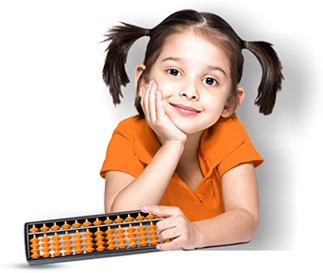
For families who want structured support alongside these everyday habits, UCMAS provides abacus-based learning designed to strengthen mathematical ability along with concentration, memory, visualization, and confidence.
Here is how you can make math a more natural part of your child’s life at home.

1. Look for Math That Is Already Around Your Child
Children sometimes assume that math exists only in textbooks because that is where they encounter it most formally.
Show them otherwise.
At the grocery store, ask your child to estimate what three items might cost together. While cooking, let them measure ingredients. When leaving home, ask how many minutes you have before you need to arrive somewhere. Younger children can count objects, compare quantities, identify shapes, or sort household items.
These tiny conversations make numbers practical.
UCMAS Canada also recommends everyday counting, sorting, pattern games, puzzles, spatial play, and math-friendly language as simple ways parents can strengthen numeracy at home.
Parents looking for more learning ideas can explore the UCMAS Canada Reading Corner – articles for parents and children.
2. Ask “How Did You Get That?” More Often
A correct answer tells you what your child knows.
Their explanation tells you how they think.
Suppose your child says 25 + 17 = 42. Instead of immediately moving to the next question, ask:
“How did you work that out?”
One child might add 20 + 10 and then 5 + 7. Another may turn 17 into 15 + 2 and calculate 25 + 15 + 2.
Allowing children to explain different approaches teaches them that mathematics involves reasoning, not merely remembering one procedure.
This becomes especially important when a child makes a mistake. Rather than immediately correcting them, ask them to walk you through their thinking. They may discover the error themselves.
3. Build Mental Math Into Short Daily Challenges
You do not need an hour-long practice session.
Try five or ten minutes.
Ask simple questions in the car, while preparing dinner, or during a quiet moment:
“What is double 14?”
“If something costs $7 and we buy three, approximately how much will we spend?”
“What number do you add to 36 to reach 50?”
Regular mental math for kids encourages children to work flexibly with numbers instead of automatically reaching for paper, a calculator, or a device.
If your child enjoys this kind of challenge, structured UCMAS Mental Math Program – abacus-based mental calculation training can take the skill further. Children begin by manipulating physical abacus beads and gradually learn to visualize the abacus mentally.
4. Don’t Let Speed Become the Only Definition of “Good at Math”
Parents naturally feel proud when children calculate quickly. But speed alone should not become the goal.
A child who needs additional time but understands why an answer works may have a stronger foundation than a child who quickly recalls a memorized procedure without understanding it.
Focus on progress.
Praise your child for spotting a pattern, trying a different strategy, correcting an error, or staying with a difficult problem.
This is particularly important for children who have started saying, “I’m just bad at math.”
UCMAS Canada’s article on how mental math can build children’s confidence explains how repeated, visible progress can help children see that something difficult can become manageable with practice.
5. Turn Games Into Math Practice
If your child resists worksheets, put them away occasionally.
Cards, board games, puzzles, building blocks, dice, shopping games, and number challenges can all encourage mathematical thinking without making children feel as though they are completing extra homework.
For example, roll two dice and ask younger children to add the numbers. Older children can multiply them. Play a shopkeeper game and let your child calculate totals and change.
The objective is simple: give your child repeated contact with numbers in situations where getting the answer feels rewarding.
6. Know When Home Practice Needs Extra Structure
Home support can be powerful, but parents do not have to become math teachers.
If your child continually avoids numbers, struggles to calculate mentally, loses concentration quickly, or needs more challenge than schoolwork provides, structured enrichment may help.
Parents comparing mental math courses or searching online for “abacus classes near me” should look beyond calculation speed. Ask whether a program develops transferable skills and whether children progress systematically rather than simply memorizing tricks.
The UCMAS after school math program – structured learning beyond the classroom is designed for children to develop mathematical abilities alongside skills such as concentration, problem-solving, and confidence. UCMAS describes its teaching approach as complementary to mathematical concepts children encounter in Canadian schools.
Parents can also read about how early numeracy development shapes academic confidence to understand why building a positive relationship with numbers early can matter.
7. Find the Right Math Support in Quebec
The right learning environment should make your child more willing to tackle challenges—not more afraid of getting an answer wrong.
For parents considering abacus classes in Quebec, UCMAS offers programs for children aged 5–13 and currently lists multiple centres within the province. You can use the UCMAS Centre Finder to check available locations.
The goal is not to replace what children learn at school. It is to give them another way to interact with numbers and progressively develop stronger arithmetic, visualization, concentration, and confidence.
Small Math Moments at Home Can Create Big Learning Gains
You do not need elaborate teaching materials to support your child’s mathematics.
Ask questions. Cook together. Estimate grocery totals. Play number games. Celebrate good reasoning rather than only correct answers. Most importantly, let your child discover that making a mistake is part of figuring something out.
When these everyday habits are combined with structured learning, children can begin approaching mathematics with greater independence and confidence.
For Quebec families looking for that additional support, UCMAS can help children develop skills that extend beyond faster calculations.
Book a UCMAS abacus session to experience the program firsthand and see how your child responds to a different way of learning numbers.