




Watching someone solve calculations in their head within seconds can make mental math look like an advanced skill reserved for older students or mathematical geniuses. Understandably, parents of younger children may wonder whether introducing it too early could create unnecessary pressure.
But mental math for young learners does not have to begin with complicated equations or memorization. When taught progressively through visual, hands-on methods, children can learn to understand numbers before being expected to calculate quickly.
At UCMAS, children develop calculation skills through structured abacus-based learning that progresses according to their abilities. Rather than asking whether mental math is inherently too difficult, parents should consider whether it is being introduced in a developmentally appropriate way.
Why Does Mental Math Seem Difficult?
For adults, mental arithmetic often means looking at a problem and immediately calculating the answer mentally. A young child who is still learning what numbers represent may understandably find that challenging.
Young learners often need something concrete before moving toward abstract calculations. Seeing and moving objects can help them understand quantities, patterns, addition, and subtraction.
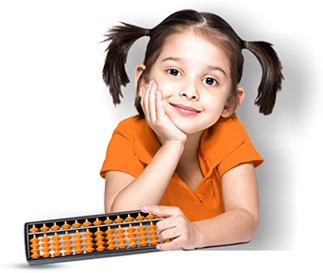
This is one reason an abacus can be helpful. Children physically move beads while solving problems, giving numbers a visual and tactile representation.
As they become comfortable with the process, they gradually learn to visualize the abacus mentally. Instead of relying entirely on written calculations, they can begin manipulating numbers in their minds.
Parents wondering how this transition works can explore What Is Mental Math for Elementary Students? for a closer look at mental calculation skills.
Young Children May Be More Ready Than Parents Think
Age alone does not determine whether a child is ready to learn. The method, pace, complexity, and learning environment matter too.
A well-structured mental arithmetic course does not begin by expecting a five-year-old to perform the same calculations as a ten-year-old. Children start with foundational number concepts and gradually move toward more advanced exercises.
In fact, introducing number skills early can give children more time to become comfortable with numbers. The goal should not be to rush them into advanced mathematics but to create a strong foundation.
The UCMAS article on Mental Math Before Grade 3 explains why early exposure to number-based activities can support children’s developing math skills.

Can a 5-Year-Old Really Learn Abacus?
Yes, many five-year-olds can begin learning basic abacus concepts when instruction matches their developmental level.
At this age, children often enjoy touching, moving, sorting, and experimenting with objects. That can make an abacus an engaging learning tool rather than simply another piece of math equipment.
Instead of staring at a worksheet filled with numbers, children interact with beads to represent quantities and calculations.
If you are specifically wondering whether kindergarten-age children are ready, Can 5-Year-Olds Learn Abacus? explores this question in greater detail.
From Physical Beads to Mental Calculation
The progression from an actual abacus to solving problems mentally does not happen overnight.
Initially, children become familiar with the tool and learn how bead positions represent numbers. They then practise basic calculations by physically moving the beads.
With consistent practice, those movements and bead patterns become increasingly familiar. Children may eventually begin visualizing those patterns without needing the physical abacus for every calculation.
This gradual progression is central to abacus learning.
Parents interested in understanding the wider developmental value can read Decoding the Benefits of Abacus Learning.
Mental Math Is About More Than Speed
Fast calculation is one noticeable result parents may associate with mental math courses, but speed should not be the only objective.
Regular practice asks children to pay attention, recall information, recognize patterns, and work through calculations accurately. These activities can help exercise several learning skills at the same time.
A structured abacus math course may support:
- Calculation fluency and accuracy
- Number familiarity
- Concentration during problem-solving
- Visualization
- Confidence when working with numbers
- Regular practice and learning discipline
These skills can make mental math for kids valuable as a form of math enrichment for children rather than simply a shortcut for producing faster answers.
Is Mental Math Harder Than Traditional Math?
Not necessarily. It is simply a different approach.
Traditional classroom mathematics often involves written methods, formulas, and step-by-step calculations on paper. Mental math emphasizes understanding and manipulating numbers without always relying on written work.
Some children may initially find one approach easier than the other.
Abacus-based instruction can help bridge the gap between concrete and abstract learning. Children begin with something they can physically see and touch before progressing toward visualization.
Parents looking for a structured starting point can explore the UCMAS Abacus for Kids program to understand how the learning process is organized.

The Right Pace Makes the Difference
The biggest mistake is assuming that teaching mental math early means pushing children to calculate faster and faster.
Young learners need time to understand concepts, make mistakes, practise, and gain confidence. Difficulty should increase gradually as their skills develop.
Parents can support the process by keeping practice consistent but manageable. Instead of focusing exclusively on speed, notice whether your child understands the task, is becoming more accurate, and feels comfortable attempting new calculations.
Mental math should challenge a child without making every practice session feel overwhelming.
So, Is Mental Math Too Difficult for Young Learners?
Mental math can appear difficult when children are expected to jump directly into abstract calculations. But when learning begins with visual, hands-on activities and progresses gradually, young children can develop these skills step by step.
The objective is not to turn children into human calculators overnight. It is to help them build familiarity with numbers, practise calculation, strengthen concentration, and become more confident when approaching mathematics.
Through its structured learning approach, UCMAS helps children move from physical abacus practice toward mental visualization at a pace designed for progressive learning.
Wondering whether your child is ready to begin? Book an abacus session with UCMAS and let your child experience the learning approach firsthand.